AI Predictive Staffing: How Hospitals Prevent Workforce Shortages
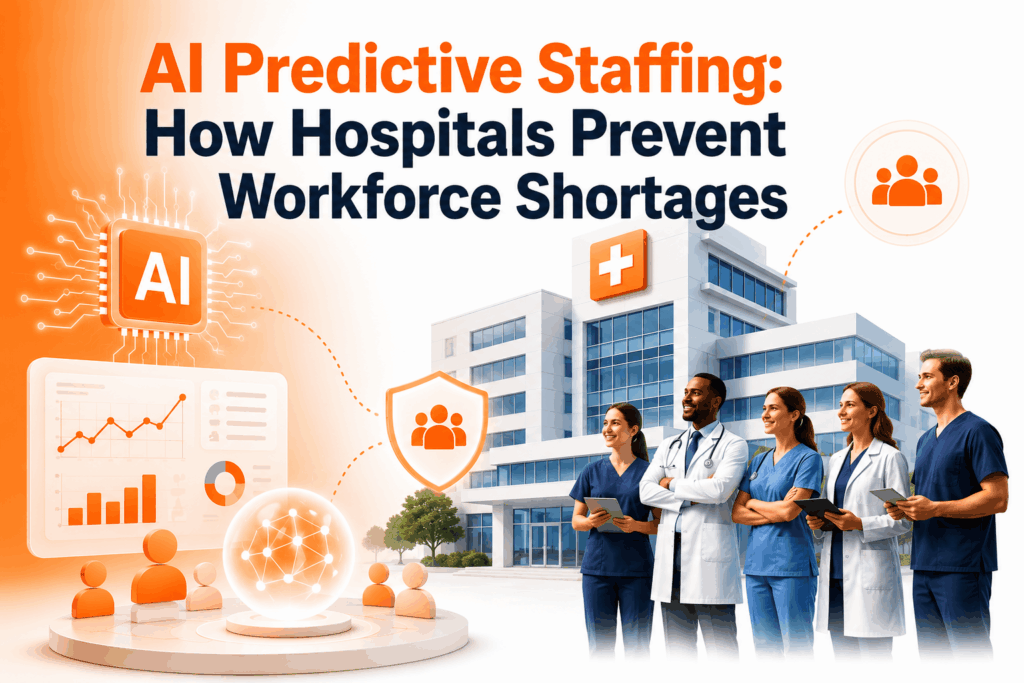
AI predictive staffing is the use of machine learning to forecast patient volume, absenteeism, and skill demand so hospitals can schedule the right number of qualified staff before a shortage happens. It replaces reactive, spreadsheet-based scheduling with data-driven forecasts built from historical census, seasonal, and workforce data.
Key Takeaways
- AI predictive staffing uses historical and real-time data to forecast hospital staffing needs days or weeks in advance.
- According to the Bureau of Labor Statistics (2025), the United States has roughly 1.9 million healthcare job openings projected each year.
- The NCSBN 2024 National Nursing Workforce Study found that more than 138,000 nurses left the workforce since 2022.
- Deloitte (2025) reports the World Health Organization estimates a global shortfall of 10 million health care workers by 2030.
- Hospitals using predictive nurse staffing models report fewer overtime hours, lower agency staffing costs, and improved patient-to-nurse ratios.
- National Library Of Medicine (2023) reports more than 275,000 new nurses will be needed in the U.S. through 2030.
What Is AI Predictive Staffing and Why Hospitals Need It?
AI predictive staffing is defined as the application of machine learning algorithms to patient census data, seasonal illness trends, and historical staffing records to forecast future workforce needs. Hospitals use it to schedule nurses, technicians, and support staff before demand spikes occur, rather than scrambling to fill gaps after they appear.
Traditional hospital scheduling relies on fixed shift templates and manual adjustments made by unit managers. This reactive model consistently underperforms when patient volume shifts unexpectedly, which is common in emergency departments, ICUs, and seasonal flu units.
According to Deloitte (2025), the global health care workforce shortage is expected to continue in 2025, and the World Health Organization estimates a shortfall of 10 million health care workers by 2030.
Hospital leaders are responding by adopting healthcare workforce forecasting tools that combine electronic health record (EHR) data, staffing history, and external factors like local flu activity or weather events. Our earlier analysis on AI and automation in healthcare staffing explored how these same technologies are reshaping recruitment and retention, and predictive staffing is the natural extension of that shift into day-to-day scheduling.
How Does Predictive Nurse Staffing Actually Work?
Predictive nurse staffing works by feeding a machine learning model years of historical admission, discharge, and transfer (ADT) data alongside staffing records. The model identifies patterns, such as higher ICU admissions during winter months, and generates staffing recommendations for specific units, shifts, and skill levels weeks before they are needed.
The typical predictive nurse staffing workflow includes:
- Data collection from EHR, scheduling, and time-and-attendance systems
- Model training on 12 to 36 months of historical census and staffing data
- Forecast generation for daily or weekly staffing needs by unit and skill mix
- Automated shift recommendations sent to schedulers or staff self-service apps
- Continuous model retraining as new census and outcome data arrives
AI Predictive Staffing vs Traditional Hospital Staffing
The difference between AI predictive staffing and traditional hospital staffing is that predictive models forecast demand before it happens, while traditional staffing reacts to demand after it appears on the floor. This difference directly affects overtime costs, nurse-to-patient ratios, and burnout rates.
| Factor | Traditional Staffing | AI Predictive Staffing |
|---|---|---|
| Planning method | Fixed templates, manual overrides | Machine learning forecasts updated continuously |
| Response to demand spikes | Reactive, often same-day | Proactive, forecasted days or weeks ahead |
| Overtime and agency use | Higher, driven by last-minute gaps | Lower, gaps identified before they occur |
| Data used | Manager experience, static schedules | EHR data, census history, seasonal trends |
| Staff experience | Higher burnout from short-notice shifts | More predictable schedules, less last-minute disruption |
Which Hospitals Benefit Most From Predictive Staffing Models?
Hospitals with high patient volume variability benefit most from predictive staffing models, including emergency departments, labor and delivery units, and ICUs. These units experience the largest swings in demand and carry the highest financial and clinical risk when understaffed, making them the priority starting point for most hospital staffing optimization initiatives.
Rural and mid-sized hospitals also see strong returns because they typically operate with thinner staffing margins and limited access to agency nurses on short notice. A predictive model gives these facilities more lead time to arrange coverage before a shortage becomes a patient safety issue.
Hospital Staffing Optimization: A Real-World Example
Hospital staffing optimization through predictive analytics has moved from pilot programs into standard operating practice at many health systems, giving nurse managers unit-level forecasts instead of relying on gut instinct and static templates to decide how many staff to schedule for each shift and skill level. According to the American Hospital Association (2025), when hospitals combine predictive analytics, decision-support systems, and automation, they can optimize staffing, cut costs, and reduce reliance on contract labor.
A mid-sized regional health system with four hospitals implemented a predictive staffing platform across its medical-surgical and telemetry units. By feeding two years of ADT data and seasonal flu trends into the model, the system generated 14-day staffing forecasts by unit. Nurse managers used these forecasts to adjust part-time and float pool schedules in advance rather than calling in agency staff during surges.
Within two quarters, the health system reported a measurable drop in agency nursing spend and fewer last-minute callouts, since staff received schedule changes with more notice. This mirrors a broader industry pattern: according to the NCSBN 2024 National Nursing Workforce Study, more than 138,000 nurses left the workforce since 2022, and nearly 40 percent of nurses intend to leave the workforce by 2029, making retention-friendly scheduling a financial necessity, not a convenience.
Getting Started With AI Predictive Staffing
Getting started with AI predictive staffing requires clean historical data, integration with existing scheduling and time-and-attendance systems, and buy-in from unit-level managers who will act on the forecasts day to day. Hospitals that skip the data-quality step early on often see inaccurate forecasts, and staff quickly lose trust in the system within the first few months of rollout.
Here are the top steps to implement AI predictive staffing successfully:
- Audit existing EHR, scheduling, and time-and-attendance data for completeness and consistency
- Start with one or two high-variability units, such as the ED or ICU, before scaling hospital-wide
- Involve charge nurses and unit managers in validating early forecasts against real-world outcomes
- Pair predictive staffing software with a flexible float pool or per-diem staffing partner for surge coverage
- Track overtime hours, agency spend, and turnover rate before and after implementation to measure ROI
According to National Library Of Medicine (2023), more than 275,000 new nurses are needed in the United States through 2030, which means predictive tools alone will not close the gap. Hospitals also need reliable staffing partners who can supply qualified clinical talent on short notice.
Can AI Predict a Nursing Shortage Before It Happens?
Yes, AI can flag an approaching nursing shortage weeks in advance by tracking leading indicators such as rising ED volume, seasonal illness trends, and internal staff attrition signals. This lead time gives hospital leaders room to activate float pools, adjust PRN schedules, or engage staffing agencies before patient care is affected.
Conclusion
AI predictive staffing gives hospitals a data-driven way to forecast demand, reduce overtime and agency spend, and protect nurses from burnout caused by last-minute scheduling. Combined with healthcare workforce forecasting and hospital staffing optimization strategies, it turns a reactive staffing model into a proactive one. As workforce shortages continue through 2030, hospitals that pair predictive nurse staffing with reliable clinical staffing partners will be best positioned to keep units fully covered. Contact VIVA USA to build a staffing strategy that combines predictive insight with qualified healthcare talent.