AI and Nurse Burnout: How Smarter Staffing Supports Retention
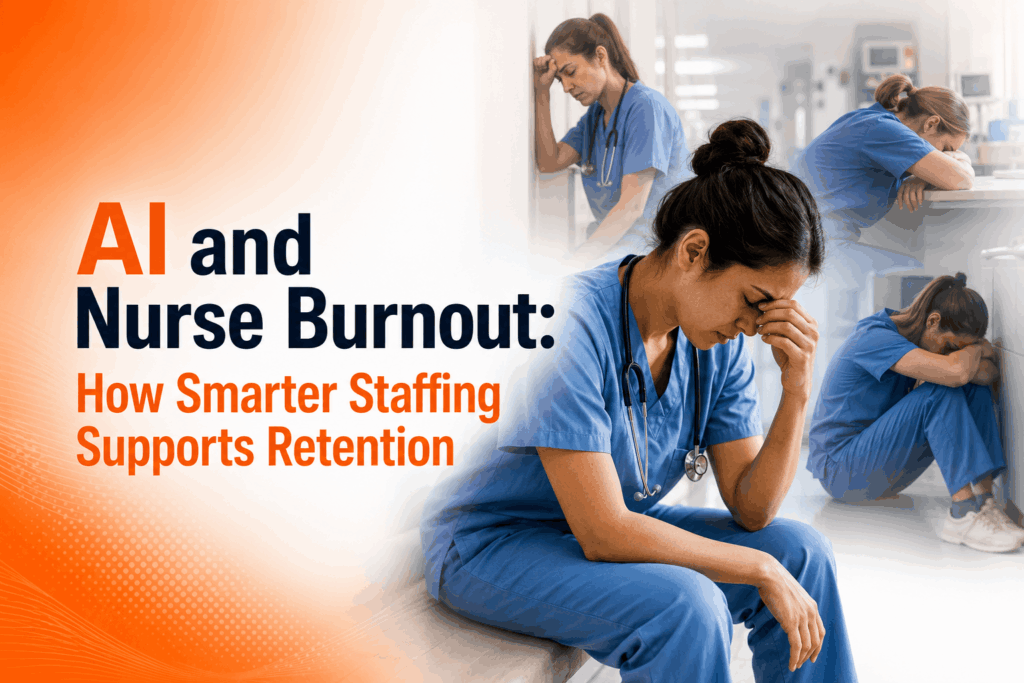
AI and nurse burnout are connected through staffing data. AI is software that analyzes patient volume, acuity, and historical trends to predict staffing needs before shortages occur. Matching nurse staffing to real-time demand reduces the understaffing that drives burnout and improves retention.
Key Takeaways
- According to NSI Nursing Solutions (2024), hospital RN turnover was recorded at 18.4%, a 4.1 percentage point decrease from 2022.
- According to NSI Nursing Solutions (2025), the average cost to replace one bedside RN is approximately $56,300 to $60,090.
- According to Health Leaders Media (2024), 45% of nurse managers report they are considering leaving their roles, with burnout and poor work-life balance cited as the leading drivers.
- According to the Office of the National Coordinator for Health IT, ASTP Health IT Data Brief No. 80 (2024), predictive AI adoption in U.S. hospitals rose from 66% in 2023 to 71% in 2024.
- AI-driven scheduling tools help hospitals reduce mandatory overtime, close last-minute coverage gaps, and give nurses more predictable schedules.
- Healthcare workforce management platforms use AI to forecast census, PTO conflicts, and float-pool needs weeks in advance instead of days.
What Is the Link Between AI and Nurse Burnout?
AI and nurse burnout are linked because chronic understaffing, unpredictable schedules, and last-minute shift changes are top drivers of nurse exhaustion. Understanding AI and nurse burnout starts with staffing data: AI forecasts patient volume and matches staffing to demand in advance, reducing the short-staffed shifts most linked to exhaustion and turnover intent.
How Common Is Nurse Burnout in U.S. Hospitals Today?
Nurse burnout remains widespread across U.S. hospitals, particularly among frontline and management staff. According to Nurse Leader (2024), 45% of nurse managers are considering leaving their roles, with burnout and lack of work-life balance named as the primary drivers. This trend directly affects frontline retention, since manager turnover is associated with measurable declines in staff nurse retention.
Burnout shows up in measurable workforce data, not just survey sentiment. Hospitals with the highest turnover also report the most frequent short-staffed shifts and highest use of mandatory overtime. This creates a cycle: burnout drives turnover, and turnover creates the understaffing that fuels more burnout.
Why Does Understaffing Drive Nurse Burnout?
Understaffing drives nurse burnout because it increases patient load per nurse, extends shift lengths, and removes recovery time between demanding shifts. When staffing does not match patient acuity, nurses absorb the gap through overtime and skipped breaks, which accelerates emotional exhaustion and depersonalization, the two clinical markers most associated with burnout.
Common understaffing triggers include:
- Sudden patient census spikes that outpace scheduled staff
- Unplanned call-outs with no float-pool backup
- Seasonal surges without adjusted staffing models
- Manual scheduling that reacts to shortages instead of predicting them
How Does AI Reduce Nurse Burnout Through Smarter Staffing?
The connection between AI and nurse burnout becomes clear once reactive, manual scheduling is replaced with predictive staffing models. These models analyze historical admission patterns, seasonal trends, and local health data to forecast patient volume days or weeks ahead, allowing hospitals to staff proactively instead of scrambling to fill gaps after they appear.
What Is Predictive AI Staffing and How Does It Work?
Predictive AI staffing is defined as a workforce management approach that uses machine learning to forecast patient census and match nurse staffing levels accordingly. The system pulls data from electronic health records, admission history, and scheduling systems, then generates staffing recommendations that account for skill mix, unit acuity, and nurse preferences.
Step-by-Step: How AI-Driven Scheduling Lowers Burnout Risk
- The AI platform ingests historical census, acuity, and staffing data.
- It forecasts patient volume for upcoming shifts, days, or weeks.
- The system recommends staffing levels by unit, shift, and skill mix.
- Nurse leaders review and approve AI-generated schedules.
- The platform flags coverage gaps early, before they become emergencies.
- Nurses receive more predictable schedules with fewer last-minute changes.
This process reduces the two conditions most linked to burnout: chronic understaffing and unpredictable scheduling.
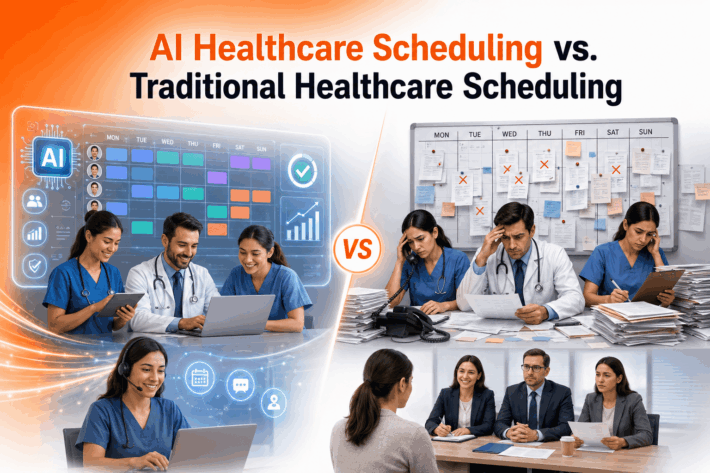
Traditional Staffing vs. AI-Driven Staffing
| Factor | Traditional Staffing | AI-Driven Staffing |
|---|---|---|
| Scheduling approach | Reactive, based on immediate need | Predictive, based on forecasted demand |
| Coverage gap detection | Identified after shortage occurs | Flagged days or weeks in advance |
| Overtime and mandation | Higher, used to fill sudden gaps | Lower, reduced through advance planning |
| Nurse schedule predictability | Frequent last-minute changes | More stable, forecasted schedules |
| Data used | Manager experience, spreadsheets | EHR data, census trends, acuity scores |
What Are the Best Nurse Retention Strategies Using AI Healthcare Workforce Management?
The best nurse retention strategies pair AI and nurse burnout prevention directly: AI healthcare workforce management identifies staffing risk and forecasts demand, while nurse managers use that data to build fair schedules, plan float-pool coverage, and address burnout risk before it results in resignation.
Top AI-supported retention strategies include:
- Predictive census forecasting to prevent chronic understaffing
- Automated float-pool matching based on skill and unit need
- Early-warning alerts for units trending toward mandatory overtime
- Self-scheduling tools that use AI to balance nurse preference with coverage needs
- Attrition-risk scoring that flags nurses showing early signs of disengagement
Real-World Example: AI Staffing in a Multi-Hospital System
A useful example is a multi-hospital health system that adopted AI-based predictive scheduling across its inpatient units. By forecasting census two to three weeks ahead, unit leaders shifted from reactive last-minute staffing calls to proactive scheduling adjustments. Nurse leaders reported fewer emergency callouts to fill shifts and more consistent adherence to planned nurse-to-patient ratios, both of which reduce the acute stress that contributes to burnout.
This mirrors industry findings: hospitals using AI-based scheduling report gains in workforce efficiency and retention because coverage gaps are caught before they force nurses into unplanned overtime.
What ROI Can Hospitals Expect from AI Workforce Management?
Hospitals adopting AI workforce management can expect ROI through reduced turnover costs and lower reliance on contract or agency labor. Since NSI Nursing Solutions (2025) estimates the cost of replacing a single RN at roughly $56,300 to $60,090, even a one to two percentage point drop in turnover can save a mid-size hospital hundreds of thousands of dollars annually.
Conclusion
AI and nurse burnout are closely connected through staffing data, and AI-driven scheduling is one of the most effective nurse retention strategies available today. By forecasting demand, closing coverage gaps early, and cutting mandatory overtime, AI healthcare workforce management directly addresses the understaffing behind burnout. To reduce nurse burnout and strengthen retention, hospitals can contact VIVA USA to explore healthcare staffing solutions built around predictive, data-driven workforce management.
FAQ
Frequently Asked Questions
No. AI supports nurse managers by providing forecasts and recommendations, but nurse leaders retain final decision-making authority over schedules, ensuring clinical judgment and staff preferences are still considered.