Remote & Hybrid Work: Reshaping IT Staffing Strategies
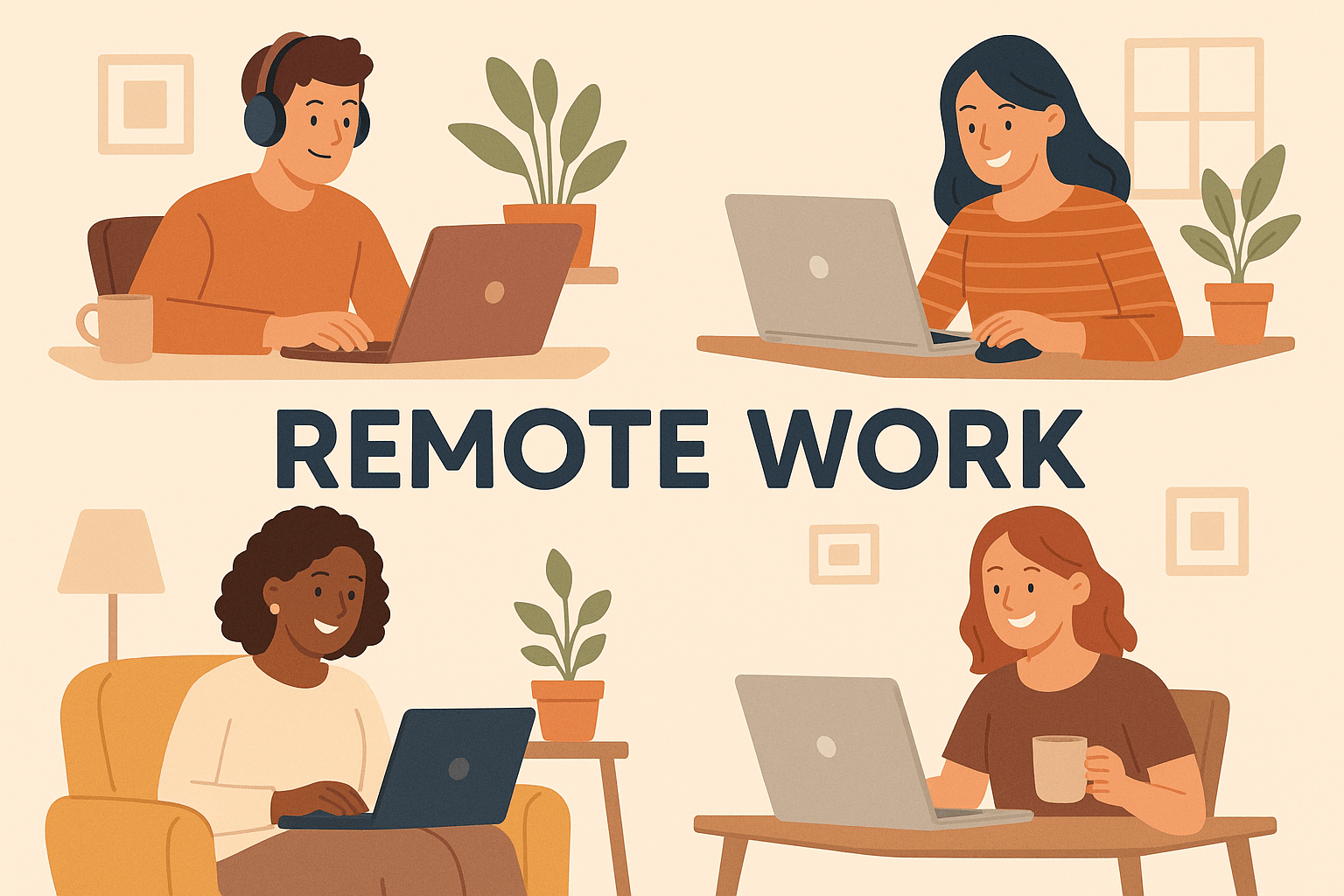
Remote and hybrid work are no longer optional perks. They have become the foundation of modern IT staffing strategies, shaping how organizations attract talent, manage teams, and control costs. By widening the talent pool beyond local boundaries, reducing time-to-hire, lowering payroll expenses, and enabling global coverage, these models have redefined the competitive landscape for technology delivery.
Recent studies by Statista, McKinsey, and NASSCOM confirm that remote staffing, particularly from India, not only delivers measurable cost savings but also helps sustain high productivity.
Why Remote and Hybrid Work Became the New Standard in IT
The shift to flexible work models accelerated during the pandemic, but its staying power comes from the clear benefits for both employers and employees.
- Employee capability and preference: McKinsey’s American Opportunity Survey (2023) found that 58% of U.S. workers can work from home at least one day per week, while 35% can work remotely full time. 87% of those offered flexibility take advantage of it.
- Employer adoption: According to Statista’s 2024 research, the percentage of people working from home increased from 20% in 2020 to 28% in 2023.
- Productivity impact: Based on a McKinsey survey, 87% of respondents indicated they would be more productive working their preferred number of days from home compared to working in the office five days a week.
Bottom line: Remote and hybrid work have evolved from short-term fixes to core business strategies in IT.
How Remote and Hybrid Work Transform IT Staffing Strategies
1. Access to Global Talent
With remote staffing, location is no longer a limiting factor. Employers can reach highly specialized talent in areas like AI engineering, cloud architecture, DevOps, and cybersecurity without being restricted to a single metropolitan market. This expanded access reduces skill shortages and opens opportunities for niche roles.
Example: A U.S.-based software company needing Kubernetes experts can source candidates from India, Poland, and Brazil in parallel, instead of competing for the same limited pool locally.
2. Faster Hiring
Sourcing talent across multiple geographies accelerates hiring. Recruiters can run simultaneous searches in different time zones, shortening the average time-to-fill. For fast-moving industries like IT, this speed is crucial for hitting product launch or infrastructure upgrade deadlines.
3. Cost Structure Advantages
- Facilities savings: Hybrid policies can cut office space requirements by 20–40%, reducing rent, utilities, and maintenance.
- Payroll optimization: Combining onshore and India-based remote staff can produce 30–80% payroll savings for equivalent roles. Even when paying top-tier rates in India, total costs remain substantially lower than in the U.S. or Western Europe.
4. Resilience Through Follow-the-Sun Models
Remote and hybrid structures allow IT teams to operate around the clock by distributing work across regions. This “follow-the-sun” model enables:
- 24/7 incident management without overtime premiums
- Faster feature delivery through continuous development handoffs
- Greater resilience during local outages or disruptions
Remote Staffing in India: A Strategic Edge
Remote staffing in India offers access to a large pool of highly skilled professionals at significantly lower labor costs compared to Western markets. It also enables round-the-clock productivity due to time zone differences, accelerating project delivery.
India’s IT ecosystem offers unmatched advantages for companies seeking to optimize costs without sacrificing quality.
1. Talent Supply and Maturity
- Scale: NASSCOM (2024) reports more than 5 million tech professionals in India, with rapid growth in cloud computing, AI, and cybersecurity.
- Maturity: Decades of global delivery experience mean Indian teams are well-versed in agile, DevOps, and enterprise security standards.
2. Payroll Savings
- A report from India Today indicates that software engineers in India earn 30–60% less than their counterparts in the United States.
- Even when factoring in benefits, equipment, and management costs, India-based remote teams offer significant savings.
3. Time-Zone Advantages
- India Standard Time (IST) overlaps conveniently with European mornings and U.S. mornings or evenings, enabling both real-time and asynchronous collaboration.
- This overlap makes India ideal for hybrid models where daily touchpoints are needed without forcing late-night calls.
4. Quality and Leadership
- Indian engineers are no longer just implementers. Many now lead product engineering, platform development, and DevOps for Fortune 500 companies, ensuring quality leadership as well as technical execution.
Building a High-Performance Hybrid or Remote IT Team
1. Define the Operating Model
Set clear policies on remote versus in-office expectations. Adopt a unified toolset — GitHub, Jira, Slack, Zoom — to support collaboration and enforce consistent workflows for CI/CD, code reviews, and incident handling.
2. Hire for Outcomes
Write job descriptions with measurable objectives, such as reducing incident resolution times or improving deployment frequency, instead of generic role duties.
3. Develop India-First Talent Pipelines
Partner with staffing agencies experienced in India remote staffing and compliance. Offer competitive pay, professional growth opportunities, and exposure to modern technology stacks to attract top-tier candidates.
4. Prioritize Security
Implement zero-trust policies, multi-factor authentication, and company-managed devices for all remote workers. This protects sensitive data in a distributed environment.
5. Measure and Optimize
Track KPIs such as:
- Time-to-hire
- Ramp-up time
- Deployment frequency
- Mean time to recovery (MTTR)
Use these insights to continuously refine your IT staffing strategies
Conclusion
Modern IT staffing strategies increasingly depend on remote staffing and hybrid work to stay competitive. Employees value the flexibility, productivity remains strong, and companies benefit from cost efficiencies and access to global talent.
By leveraging India-based remote teams, organizations can maximize payroll savings, tap into specialized skills, and build resilient, around-the-clock delivery models. The companies that adopt these strategies today will be better prepared to adapt to market changes, scale efficiently, and maintain an edge in the fast-moving technology sector.
VIVA USA Inc. is a leading provider of contingent and temporary staffing solutions serving Fortune 500 companies, government agencies, and public sector organizations. We specialize in IT, healthcare, engineering, and professional staffing with flexible hiring models, including MSP, staff augmentation, and project-based hiring. Leveraging AI-powered sourcing and a proven track record of over 10,000 successful projects, VIVA delivers fast, scalable, and high-quality workforce solutions.