Emerging Recruitment Trends: AI, Automation & Skills Based Hiring Guide 2025
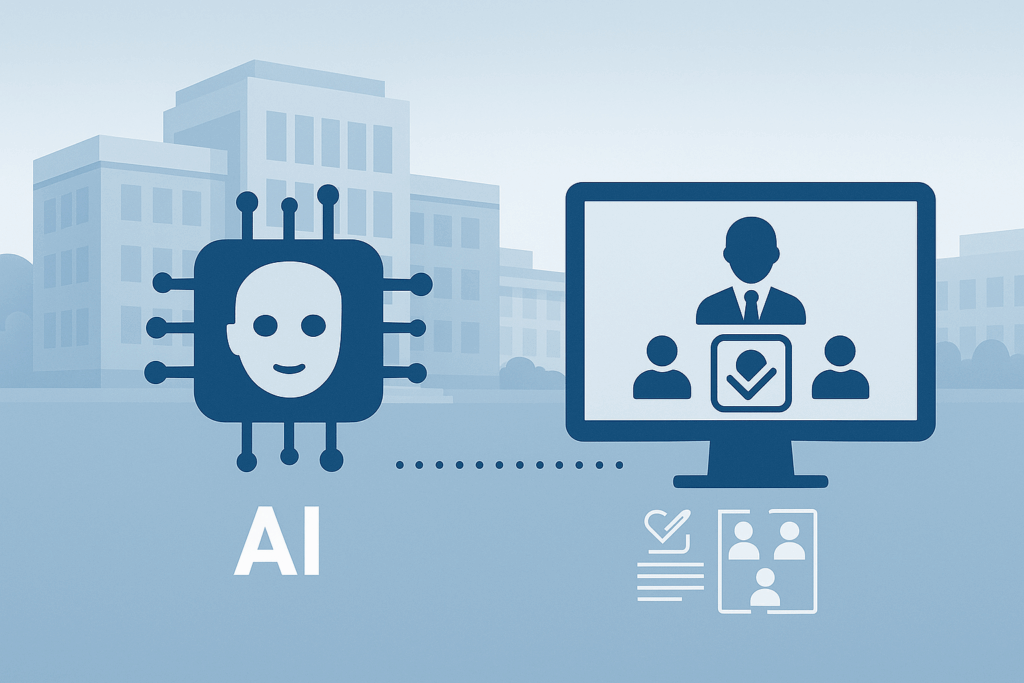
Recruiting is shifting from résumé keywords and degree filters to AI-assisted, automation-driven, skills-based hiring. The payoff includes faster time to hire, larger talent pools, better quality of hire, and stronger compliance when guardrails are in place. Below is a concise playbook, supported by recent statistics and authoritative sources, to guide your 2025 hiring strategy.
AI, automation, and skill-based hiring are reshaping how organizations attract and evaluate talent. These strategies reduce costs, improve candidate matches, and prioritize demonstrated capabilities over credentials. Employers and job seekers alike benefit from faster, fairer, and more efficient hiring outcomes in today’s competitive market.
What is Skills Based Hiring?
Definition: Skills-based hiring evaluates demonstrated capabilities, such as skills assessments, portfolios, and micro-credentials, rather than relying mainly on degrees, job titles, or tenure.
Why it matters: This approach widens eligible talent pools, improves quality of hire and workforce diversity, and accelerates internal mobility by matching verifiable skills to real business needs.
Why Recruiters Are Adopting Skills First?
Skills-first hiring enables employers to discover qualified candidates they might otherwise overlook, especially for emerging or hybrid roles. It also allows faster redeployment of internal talent and reduces degree inflation by emphasizing practical capability over academic pedigree.
Modern recruitment platforms now include skills taxonomies and AI-powered assessments that make matching more objective and scalable.
Traditional vs. Skills Based Hiring
| Hiring Approach | How Candidates Are Evaluated | When It Shines | Risks or Cons | Example Use Cases |
|---|---|---|---|---|
| Traditional (degree/title-led) | Degrees, prestige brands, years of experience | Regulated roles requiring formal credentials | Narrow talent pools, pedigree bias, slower mobility | CPA-required finance roles, licensed clinical roles |
| Skills-based | Validated skills, proficiency tests, portfolios, micro-credentials | Fast-evolving or cross-functional roles | Requires change management and consistent assessments | AI/ML engineers, cybersecurity, data operations, digital marketing |
Key Trends in Recruitment
1. AI-Powered Recruitment Automation
What it means: AI tools, from resume parsers to chatbots, automate tasks such as screening, scheduling, candidate assessments, and interview coordination.
AI-powered recruitment automation uses algorithms to screen applications, schedule interviews, and assess candidates. It reduces cost per hire by about 30%, shortens time to hire by up to 75%, and improves efficiency. This frees recruiters to focus on building relationships and engaging with top talent.
Statistics and sources:
- 87% of companies now use AI tools in recruitment, with 99% of Fortune 500 firms leading adoption (All About AI, 2024).
- Employers report 30% lower cost per hire and 25% faster time to hire using AI (All About AI, 2024).
- In North America, AI produced 40% HR cost savings (Europe: 36%) (Demand Sage, 2024).
- AI can reduce time to hire by up to 75% with automated workflows (Arena, 2025).
2. Skill-Based Hiring Over Credentials
What it means: Employers now prioritize skills, validated through practical assessments or certifications, instead of focusing exclusively on educational degrees or job titles.
Skill-based hiring emphasizes competencies and demonstrated abilities through assessments, portfolios, or micro-credentials. It improves quality of hire, reduces hiring time and cost, and broadens access to non-traditional candidates. In technology roles, nearly 90% of employers already use skills-first hiring, making it a cornerstone of modern recruitment.
Statistics and sources:
- In tech, 88% of companies use skills-based hiring, and 89% of managers are satisfied with results (Forbes, 2024).
- More than half of employers actively hire for AI-related skills (Financial Times, 2024).
3. Human + AI: Hybrid Hiring Models
What it means: While AI accelerates early stages, companies add human evaluation to ensure fairness and capture soft skills such as collaboration, creativity, and adaptability.
Hybrid hiring combines AI efficiency with human judgment by using automated screening for scale and in-person interviews for context. This ensures employers capture both technical and interpersonal skills, reduces bias, and builds candidate trust. Leading companies such as Google now require onsite interviews despite AI-led prescreening.
Examples and sources:
- Meta uses AI for scheduling and coding assessments but ensures interviews remain human-led (Business Insider, 2025).
- In India, recruiters now spend 70% of budgets on AI tools, focusing on quality hiring (Economic Times, 2025).
Why These Trends Matter
1. Efficiency and Productivity
AI and automation significantly reduce repetitive tasks, lowering cost per hire by about 30% and saving hundreds of hours. Recruiters can dedicate more time to strategic engagement and workforce planning.
2. Fairness and Accessibility
Skills-based hiring expands opportunities for non-degree talent and emphasizes real-world ability. Research shows skills earn a 23% wage premium, highlighting measurable value.
3. Candidate Experience and Trust
Job seekers often express concerns about fairness in AI-only recruitment. Hybrid models that include human interaction restore trust, allow soft-skill evaluation, and improve candidate satisfaction.
4. Quality Over Speed
AI adoption allows recruiters to focus on quality instead of filling roles quickly. For example, in India, 70% of hiring budgets now support AI-driven platforms that optimize candidate matching.
Key Takeaways
- AI-driven automation is now mainstream, with more than 87% of companies using it.
- Skill-based hiring has grown rapidly, reaching 60% adoption in 2024.
- Hybrid hiring models combine AI efficiency with human insight to strengthen quality and trust.
- Organizations that balance automation with fairness and skills-first strategies see the best results.
Conclusion
The future of recruitment lies at the intersection of AI, automation, and skills-first hiring. These trends are transforming how organizations attract, assess, and onboard talent, leading to faster, more equitable, and more effective outcomes. A balanced approach that leverages both AI efficiency and human judgment ensures sustainable success.
At VIVA USA, we integrate advanced AI screening with personalized recruiter engagement to deliver top-tier hires matched by skills, not just résumés. Contact us today to explore how we can accelerate your hiring goals.