International Nurse Recruitment in 2026: Opportunities, Challenges, and Compliance
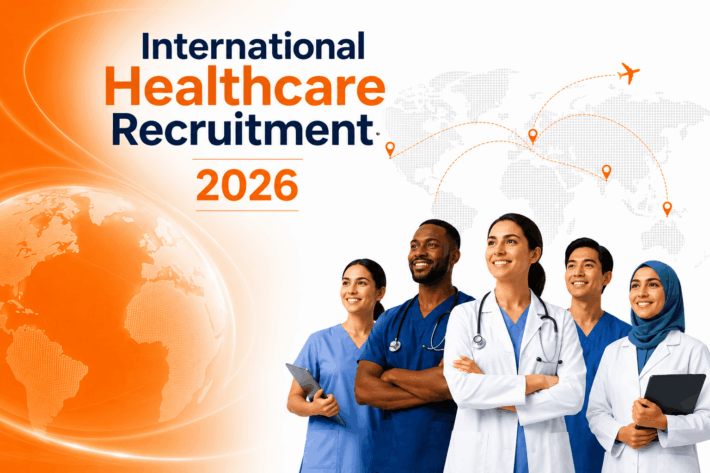
International nurse recruitment is the process of sourcing, credentialing, and onboarding registered nurses and advanced practice providers — including family nurse practitioners — from outside the United States to fill domestic healthcare staffing shortages. In 2026, it remains one of the most effective strategies for healthcare organizations facing persistent nurse hiring gaps.
Key Takeaways / Quick Facts
- The U.S. nursing shortage is projected to exceed 78,000 full-time registered nurses by 2025, with demand accelerating through 2030.
- International nurse recruitment typically takes 12–24 months from candidate sourcing to U.S. deployment due to visa processing and credentialing timelines.
- Family nurse practitioner roles are among the fastest-growing advanced practice positions targeted through international nurse staffing pipelines.
- NCLEX pass rates for internationally educated nurses have improved significantly following the transition to the Next Generation NCLEX (NGN) format in 2023.
- Compliance with CGFNS certification, state licensure, and federal immigration law is mandatory for all internationally recruited nurses.
- Healthcare systems that partner with specialized nurse staffing agencies reduce time-to-fill by up to 40% compared to direct-hire international recruitment.
Why International Nurse Recruitment Is Critical for U.S. Healthcare in 2026
International nurse recruitment is critical in 2026 because domestic nursing programs cannot produce graduates fast enough to replace retiring nurses or meet rising patient demand. Hospitals, health systems, and long-term care facilities increasingly rely on internationally educated nurses to sustain safe staffing ratios and operational continuity.
The American Association of Colleges of Nursing (AACN) reported in 2023 that U.S. nursing schools turned away 91,938 qualified applicants due to faculty shortages and limited clinical placement capacity — a structural constraint that will persist through at least 2028.
According to the U.S. Bureau of Labor Statistics (2024), the registered nurse occupation is projected to grow 5% from 2024 to 2034, adding approximately 177,400 new positions.
According to Staffing Industry Analyst (2024), the number of registered nurses in the United States is expected to fall short of demand by over 100,000 positions by 2028, driven by an aging population and increased chronic disease prevalence.
Which Countries Are the Top Sources for International Nurse Hiring?
The top source countries for international nurse hiring in 2026 are the Philippines, India, Nigeria, Kenya, and Jamaica. The Philippines alone supplies approximately 25% of all internationally educated nurses working in the United States, due to its English-language nursing education system and long-standing bilateral workforce agreements. Nigeria and Kenya have emerged as fast-growing source markets following expanded NCLEX testing center access across Sub-Saharan Africa.
What Role Does the Family Nurse Practitioner Play in International Recruitment?
The family nurse practitioner (FNP) is one of the most in-demand advanced practice roles targeted through international nurse recruitment pipelines. FNPs provide primary care across the lifespan, and their shortage is acutely felt in rural and underserved communities. Healthcare organizations increasingly sponsor internationally educated nurses to complete U.S.-based FNP bridge programs after initial RN placement, creating a dual-pipeline strategy for long-term workforce development.
Key Compliance Requirements in International Nurse Staffing
Compliance in international nurse staffing means satisfying a layered set of federal immigration requirements, credential verification standards, and state licensure rules before an internationally educated nurse can legally practice in the United States. Skipping or mismanaging any step creates legal liability and costly delays.
Here are the core compliance requirements every healthcare employer must meet:
- CGFNS Certification — The Commission on Graduates of Foreign Nursing Schools (CGFNS) must verify that the nurse’s education and licensure meet U.S. standards.
- VisaScreen Certificate — Required by federal law (IIRIRA Section 343) for all foreign-born healthcare workers seeking an occupational visa.
- NCLEX-RN Examination — All internationally educated nurses must pass the NCLEX-RN administered by the National Council of State Boards of Nursing (NCSBN).
- State Board of Nursing Licensure — Each state has its own endorsement or examination pathway; nurses licensed in one state must apply separately to practice in another.
- Immigration Visa Processing — Most internationally recruited nurses enter on an EB-3 employment-based immigrant visa, which currently carries retrogression backlogs for nationals of the Philippines and India.
- English Language Proficiency — TOEFL or IELTS scores are required by most state boards and CGFNS for applicants from non-English-speaking countries.
According to Deloitte (2023), healthcare organizations that implement standardized international credentialing workflows reduce compliance errors by 35% and cut average onboarding timelines from 22 months to 14 months.
What Are the Most Common Compliance Mistakes in International Nurse Recruitment?
The most common compliance mistakes in international nurse recruitment include incomplete VisaScreen documentation, failure to track visa retrogression dates for priority countries, and state licensure mismatches when nurses are deployed across multiple facilities. Employers who rely on generalist immigration attorneys rather than healthcare-specialized staffing partners are significantly more likely to encounter delays exceeding 6 months.
How Does EB-3 Visa Retrogression Affect Nurse Hiring Timelines?
EB-3 visa retrogression occurs when the annual cap on employment-based immigrant visas is exceeded, causing the U.S. Department of State to pause processing for oversubscribed countries. As of 2025, Filipino and Indian nurses face backlogs ranging from 3 to 7 years for new EB-3 petitions. Healthcare employers are increasingly using EB-3 “Other Worker” categories, TN visas for Canadian and Mexican nurses, and H-1B visas for advanced practice providers including family nurse practitioners to work around these constraints.
Building an Effective International Nurse Staffing Strategy in 2026
An effective international nurse staffing strategy in 2026 combines diversified source country pipelines, proactive compliance management, and a structured transition support program that reduces early attrition among internationally educated nurses. Organizations that treat international recruitment as a long-term workforce investment — rather than a short-term fix — consistently outperform those that use it reactively.
Domestic vs. International Nurse Staffing: A Quick Comparison
| Factor | Domestic Nurse Staffing | International Nurse Staffing |
|---|---|---|
| Time-to-Fill | 4–8 weeks | 12–24 months |
| Cost per Hire | Moderate to High | High upfront, lower long-term |
| Supply Availability | Limited in shortage markets | Broader global talent pool |
| Compliance Complexity | State licensure only | Federal immigration + credentialing |
| Retention Rates | Variable | Higher with transition support (65–80%) |
| Best For | Immediate short-term gaps | Sustainable long-term workforce planning |
Real-World Example: Advocate Health (formerly Advocate Aurora Health) launched a dedicated international nurse recruitment program in 2022, partnering with a specialized staffing agency to source nurses from the Philippines and Jamaica. By 2024, the program had placed over 400 internationally educated nurses across its Midwest hospital network, reducing travel nurse spend by $18 million annually and improving unit-level staffing ratios in critical care and med-surg departments.
According to the American Nurses Association (2024), internationally educated nurses represent approximately 17.8% of the total U.S. registered nurse workforce, a figure that has grown steadily since 2020.
How Can Staffing Agencies Accelerate International Nurse Hiring?
Specialized nurse staffing agencies accelerate international nurse hiring by managing the full credentialing, immigration, and deployment pipeline on behalf of the employer. Top-tier agencies maintain pre-screened candidate pools, dedicated immigration legal teams, and post-placement support programs. This reduces average time-to-bedside from 22 months (direct-hire) to as few as 12–14 months while transferring compliance liability away from the healthcare organization.
Conclusion
International nurse recruitment in 2026 is a strategic necessity for U.S. healthcare organizations navigating a structural workforce shortage. Success depends on three pillars: understanding the compliance requirements that govern international nurse hiring, building diversified source country pipelines that reduce visa retrogression risk, and investing in transition support programs that protect retention. For family nurse practitioner roles and beyond, partnering with a specialized nurse staffing agency remains the fastest and most compliant path to sustainable workforce growth.
Ready to build your international nurse staffing pipeline? Contact VIVA USA today to connect with credentialed, NCLEX-ready international nursing candidates.
Help Center
Frequently asked questions
Quick answers to questions you may have. Can't find what you're looking for? Check out our full documentation.
The difference between EB-3 and H-1B visas for nurse staffing is that EB-3 is an employment-based immigrant visa leading to permanent residency, while H-1B is a temporary nonimmigrant visa. Most registered nurses use EB-3 due to NCLEX requirements, while advanced practice providers like nurse practitioners may qualify for H-1B based on their graduate-level education and specialized role.