How Proper Background Verification Reduces Enterprise Hiring Risks
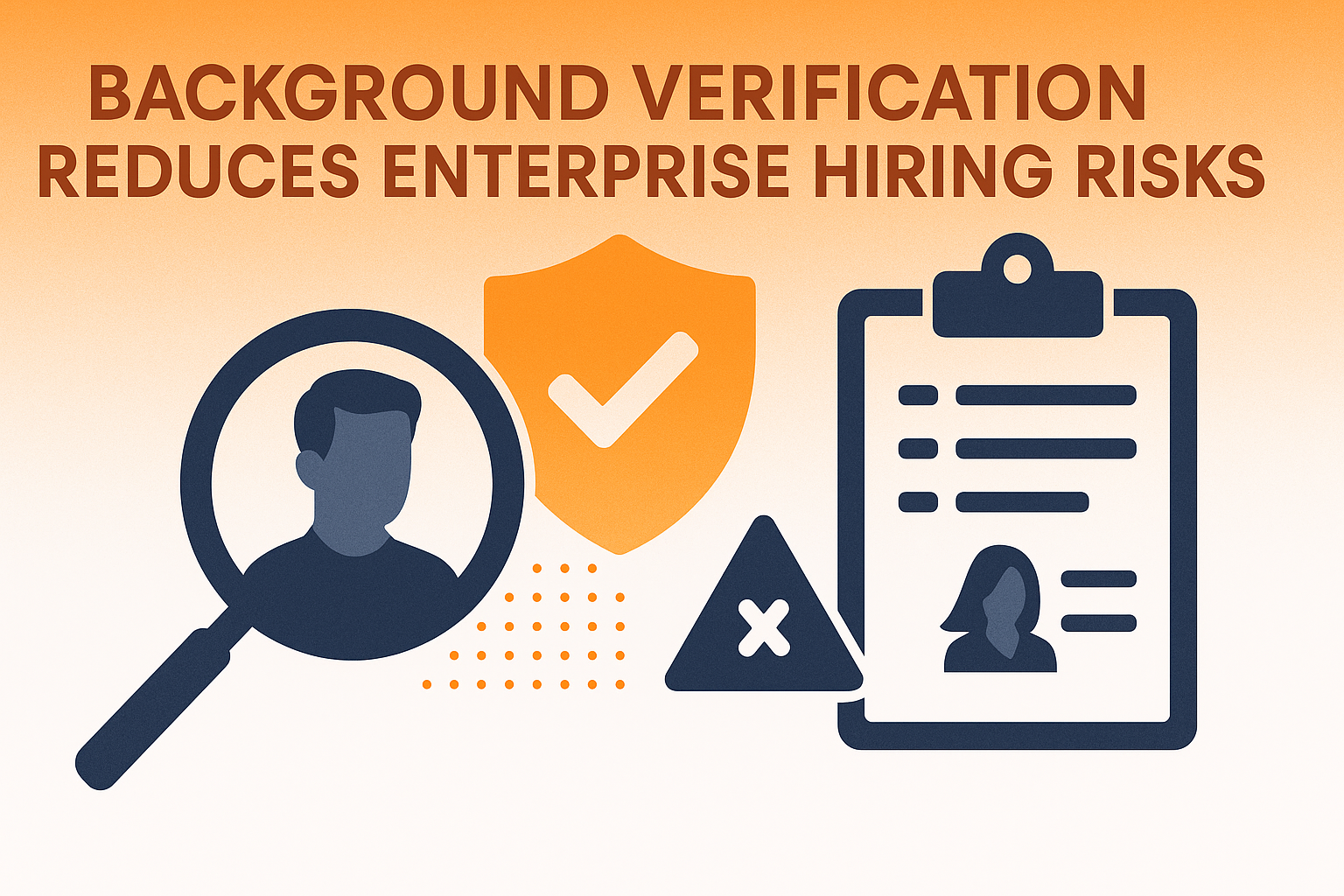
In the world of enterprise hiring, one misstep can ripple into major trouble. That is why background verification is a critical safeguard. When done thoroughly and strategically, it lowers risks tied to compliance breaches, bad hires, reputational damage, and regulatory exposure. It also positions organizations to hire smarter, faster, and with greater confidence.
Introduction
Proper background verification gives organizations the factual insight they need to reduce hiring risk, avoid costly mistakes, and build stronger teams from day one.
Why Background Verification Matters in Enterprise Hiring
What is background verification?
Background verification is the systematic process of checking a candidate’s employment history, education records, criminal and civil records, identity details, and sometimes social media or global screening for international roles.
In enterprise hiring, it ensures you do not simply hire a résumé. It confirms that the individual’s credentials, past behavior, and risk profile align with the organization’s goals and culture.
Key risks in enterprise hiring
- Bad hires: A misplaced senior hire or team member can cost far more than salary alone.
- Compliance issues: Failing to verify credentials or screen correctly can put a company in violation of laws such as the Fair Credit Reporting Act (FCRA), data privacy regulations, or industry specific requirements.
- Reputational damage: A wrong hire in a customer facing or sensitive role can affect brand trust and internal culture.
- Operational risk: Undetected fraud, misrepresentation, or credential mismatches increase the chance of internal disruption, trust issues, and productivity loss.
Enterprise Hiring Risk Mitigation Through Background Verification
Ensuring role match and credential integrity
For enterprise roles, especially those involving leadership, sensitive systems, or regulatory oversight, rigor matters. A comprehensive background verification program uncovers:
- Employment discrepancies
- Education or qualification mismatches
- Undisclosed legal issues or sanctions
- Identity inconsistencies for global and hybrid roles
Compliance and industry regulation
Enterprises operating across multiple geographies face complex compliance requirements. Without robust verification, they risk fines, lawsuits, or regulatory scrutiny. A documented verification process ensures adherence to statutory obligations and provides evidence of due diligence.
Reducing the cost of mis-hire and protecting culture
When a candidate misrepresents key information, the risk of poor performance, turnover, or misconduct increases. Background verification reduces the likelihood of bringing in someone who could create financial or cultural damage.
Supporting scalable hiring strategies
Enterprise hiring often happens in volume or under strict timelines. Integrating background verification into VMS, MSP, or ATS workflows helps maintain quality while scaling rapidly.
Statistics That Illustrate the Importance
- According to AuthBridge (2024), 15 out of every 100 employees failed the employment check.
- A study by Mordor Intelligence (2024) found that large enterprises accounted for 68 percent of the background screening market.
- HireRight’s 2023 North America Benchmark Survey reports that 86 percent of enterprises conduct criminal record checks and 54 percent verify employment history during screening.
- According to Data Bridge Market Research (2024), the global background check market was valued at USD 15.54 billion and is projected to reach USD 39.60 billion by 2032.
- The 2024 Checkr State of Screening Compliance report states that 47 percent of employers are not fully confident that their background check policies meet all legal requirements
How Proper Background Verification Works in Practice
Step by step for enterprise hiring
- Define verification scope. Determine what to check for each role, such as employment history, education, criminal records, civil records, sanctions lists, or global identity.
- Apply a structured process. Many enterprises use multi stage checks, including pre-offer, post-offer, conditional hiring, or continual monitoring for sensitive roles.
- Adjudicate using clear criteria. Create consistent red-flag categories. Examples include education fraud, employment mismatches beyond a set threshold, identity concerns, or undisclosed criminal issues.
- Ensure compliance governance. Follow laws such as the FCRA in the United States and equivalent rules globally. Maintain documentation, consent records, and audit trails.
- Integrate vendors and technology. Large scale hiring often uses automated background check tools integrated into HR tech ecosystems.
- Consider ongoing checks. For roles that pose ongoing organizational risk, periodic or continuous monitoring helps catch new developments.
Example case: enterprise hiring scenario
Imagine a Fortune 500 company hiring 50 engineers globally for a major project. Without proper background verification, several risks arise.
- One candidate claims an 18 month tenure at a previous employer, but the real duration is 6 months.
- Another candidate lists an unverified foreign degree, which later poses regulatory and security concerns.
- A third candidate has pending civil litigation that was not disclosed, creating brand risk once the information becomes public.
With structured verification in place, these issues are identified before onboarding. The organization hires only candidates whose credentials are validated, which reduces remediation costs and improves overall workforce reliability.
Key Areas Where Verification Reduces Risk in Enterprise Hiring
1. Credential and employment discrepancies
- Educational records, employment dates, titles, and responsibilities are often misstated. Verification confirms accuracy.
- AuthBridge reports a 44 percent increase in employment verification discrepancies between 2021 and 2024.
2. Compliance violations and regulatory exposure
- Highly regulated industries require thorough background checks as part of compliance.
- Almost half of employers acknowledge uncertainty about compliance.
3. Cost of bad hire and misfit
- A bad hire can cost up to 30 percent of the employee’s first year earnings.
- Seventy four percent of employers admit they have made a bad hire.
4. Brand, culture, and operational risk
- Enterprise organizations cannot risk fraud, data breaches, or cultural damage. Screening minimizes these threats.
- Verification strengthens the trust and credibility of the hiring process.
5. Scalability and global hiring
- Enterprises hiring across multiple countries require consistent quality controls.
- The rapid growth of the background screening market reinforces the need for controlled global verification processes.
Comparison Table: With vs Without Proper Background Verification
| Feature | Manual Screening | AI Matchmaking |
|---|---|---|
| Speed | Slow and highly manual | Fast and automated with quick shortlisting |
| Scalability | Hard to scale when applicant numbers rise | Handles large volumes and global talent effectively |
| Consistency and Bias | Reviews can vary between recruiters | More consistent and less prone to unconscious bias |
| Candidate Experience | Slow updates and long wait times | Faster response times and automated updates |
| Offshore Staffing Support | Time zones and cultural factors require additional effort | Built to evaluate global candidates efficiently |
| Cost Efficiency | High recruiter workload | Lower cost per hire with faster screening |
| Recruiter Focus Shift | Administrative tasks consume time | Recruiters can spend more time building relationships |
Best Practices for Enterprise Organizations
- Embed screening early but strategically. Integrate verification at a stage that protects quality without slowing down hiring.
- Define role based criteria. Senior, regulated, technical, and global roles often require deeper checks.
- Use trusted vendors and technology. Enterprise screening benefits from automated identity tools and ATS integration.
- Maintain strong compliance governance. Follow regional, federal, and local hiring laws. Update policies regularly.
- Balance speed with thoroughness. Use automation and self service portals to maintain efficiency.
- Implement continuous monitoring where appropriate. For sensitive roles, occasional or ongoing checks improve safety.
- Align verification with staffing models. Whether hiring directly or through MSP or VMS systems, ensure verification standards remain consistent.
Quick Facts
- Fifteen percent of employees failed an employment check in a 2024 sector analysis.
- Enterprises accounted for 68 percent of the background screening market in 2024.
- Eighty six percent of enterprises conduct criminal checks before hiring.
- The global background check market is projected to reach USD 39.6 billion by 2032.
- Forty seven percent of employers are uncertain about background check compliance.
Case Study: How Background Verification Saved an Enterprise Hiring Initiative
A large manufacturing enterprise hired 200 engineers globally through a contingent staffing model. By integrating a robust background verification program:
- The company uncovered employment history discrepancies in 12 percent of candidates.
- Education mismatches appeared in 8 percent of resumes, preventing regulatory exposure.
- Time to hire remained consistent because verification was already integrated into the workflow.
- The organization avoided costly rehires. Replacement costs can reach 30 to 50 percent of annual salary.
This example shows that proper background verification is not simply a compliance step. It is a strategic advantage in enterprise hiring.
Conclusion
In enterprise hiring, the stakes are high. A bad hire or a lapse in verification can create financial, operational, and cultural damage. Investing in proper background verification reduces compliance exposure, prevents costly mistakes, and strengthens team quality at scale.
If you want to enhance your contingent staffing or enterprise hiring practices, partner with a trusted staffing solutions provider such as VIVA USA Inc. VIVA delivers fast and reliable talent through proven models that include direct placement, MSP and VMS integration, staff augmentation, and talent on demand.