Skip to content
Certified Woman & Minority Owned
Important Notice for Form 1095-C
VIVA USA Inc.
  • Services
    • Contingent Staffing
      • IT Staffing
      • Healthcare Staffing
      • Government Staffing
    • Neuhire – Offshore Staffing
    • Permanent Staffing
    • Recruitment Outsourcing Solutions
    • Software Project Consulting
    • Data Cleansing & Enrichment
    • Payroll Services
  • Solutions
    • STARS – Supplier Success Portal
      • Benchmarking Report
      • Business Card Scanner
      • Certification Applications
      • Contract Spend Compliance
      • Data Scrubbing & Enrichment
      • Economic Impact Analysis
      • Engagement & Outreach
      • ESG Reporting
      • External Supplier Locator
      • Supplier Registration
      • Supplier Success Consulting
      • Tier 1 Spend Analytics
      • Tier 2 Spend Reporting
      • VA & Concierge Services
    • Global Capability Center
    • Custom Workflow Portals (SaaS)
  • Careers
    • Careers
      • US – Careers
      • India – Careers
    • Career Benefits
  • About Us
    • Who We Are
    • Awards & Recognition
    • Partnerships & Certifications
    • Contract Vehicles
    • Quality Practice
    • Past Performance
    • Testimonials
  • Insights
    • Blog
    • Case Studies
  • Contact Us
Contact
Insights

AI Healthcare Scheduling vs. Traditional Healthcare Scheduling: What Is the Difference?
August 31, 2026 Rajkumar R Comments Off on AI Healthcare Scheduling vs. Traditional Healthcare Scheduling: What Is the Difference?
ai-traditional

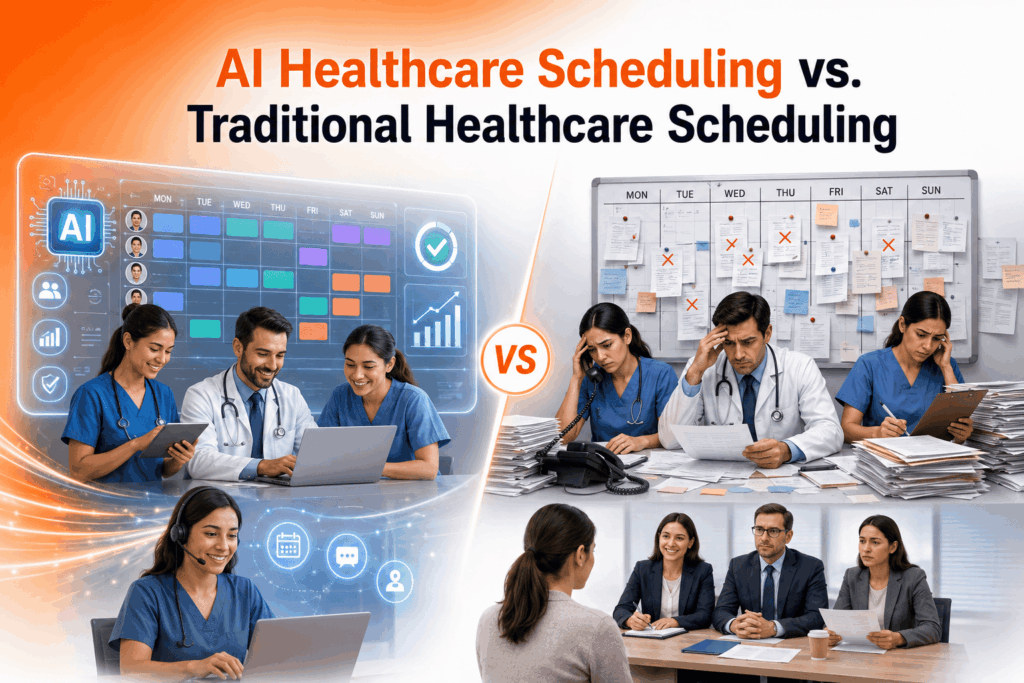
AI healthcare scheduling is defined as the use of predictive algorithms and automation software to assign nurses and clinical staff to shifts based on real-time demand, credentials, and labor rules. Traditional healthcare scheduling relies on manual spreadsheets managed by nurse managers, a slower process prone to errors and last-minute coverage gaps. 

Key Takeaways: AI Healthcare Scheduling at a Glance 

Nurse shortages and rising turnover costs are pushing hospitals toward automated scheduling technology faster than ever. The facts below summarize verified data on market growth, staffing costs, RN turnover, and scheduling technology adoption across U.S. hospitals. 

  • According to Precedence Research (2026), the global healthcare staffing market reached $44.97 billion in 2025 and is projected to grow to $87.61 billion by 2035.  
  • According to the NSI National Health Care Retention & RN Staffing Report (2026), the average cost to replace one bedside registered nurse was $60,090 in 2025.  
  • According to the U.S. Bureau of Labor Statistics (2025), registered nurses held 3,391,000 jobs in 2024, with about 189,100 annual openings projected through 2034. 
  • According to Grand View Research (2023), the healthcare segment of the global workforce management software market is projected to grow at a 13.9% CAGR, the fastest rate of any industry studied.  
  • According to the NSI National Health Care Retention & RN Staffing Report (2026), the national RN vacancy rate stood at 8.6% in 2025, with an estimated shortage of 158,600 RN positions nationwide.  

What Is AI Healthcare Scheduling? 

AI healthcare scheduling is defined as workforce technology that uses machine learning to forecast patient demand, match nurse skills to open shifts, and automatically fill gaps from call-offs or census changes. Vendors such as QGenda, UKG, ShiftMed, and Epic apply this technology across hospitals and skilled nursing facilities. 

How Does Automated Nurse Scheduling Differ From Manual Scheduling? 

The difference between automated nurse scheduling and manual scheduling is speed and accuracy. Automated systems build compliant schedules in minutes using real-time data on licensure, overtime limits, and patient acuity. Manual scheduling depends on a nurse manager cross-checking spreadsheets by hand, a process that can take eight or more hours weekly and still produce coverage gaps. 

What Technology Powers AI Nurse Scheduling Platforms? 

AI nurse scheduling platforms combine predictive analytics, self-service shift-swap tools, and integration with electronic health records like Epic and Oracle Health. These tools analyze historical census data and staff preferences to recommend or auto-assign shifts before shortages occur, cutting last-minute phone calls. 

AI Healthcare Scheduling vs. Traditional Healthcare Scheduling: Key Differences 

The difference between AI healthcare scheduling and traditional healthcare scheduling is that AI systems continuously analyze data to predict staffing needs and self-adjust schedules, while traditional methods rely on static spreadsheets and manual approval chains. AI scheduling reduces overtime and agency staffing costs; traditional scheduling depends heavily on guesswork about staff availability. 

FactorAI Healthcare SchedulingTraditional Healthcare Scheduling
SpeedMinutesHours to days
AccuracyAuto-checks licensure, overtime rulesManual cross-checks, error-prone
Shift gapsAuto-filled via predictive alertsFilled reactively by phone
Cost impactLowers overtime and agency useHigher agency staffing reliance
Staff inputSelf-service app swapsManager approval per change
ScalabilityScales across facilitiesLimited by staff bandwidth

Which Approach Reduces Nurse Burnout and Turnover? 

AI healthcare scheduling reduces nurse burnout more effectively than traditional scheduling because it accounts for fatigue patterns, honors shift preferences, and automatically limits consecutive shifts. With the national RN turnover rate at 17.6% in 2025 according to NSI Nursing Solutions (2026), predictable, fair schedules directly support nurse retention. 

How Do Costs Compare Between AI and Manual Scheduling Systems? 

AI healthcare scheduling software typically costs less over time than manual scheduling once overtime and agency staffing savings are factored in. Each percentage-point drop in RN turnover saves the average hospital roughly $295,000 annually, according to the NSI National Health Care Retention Report (2026), savings that traditional scheduling rarely captures. 

Benefits of Healthcare Workforce Scheduling Software 

Healthcare workforce scheduling software delivers measurable benefits including fewer unfilled shifts, lower overtime spending, improved labor law compliance, and higher nurse satisfaction. Hospitals using automated nurse scheduling report faster fill rates for open shifts and reduced dependence on expensive contract or travel nurse staffing agencies. 

Top 5 Ways Healthcare Workforce Scheduling Software Helps Hospitals 

Here are the top five ways healthcare workforce scheduling software helps hospitals: 

  1. Matches licensure and certifications automatically to avoid compliance violations. 
  2. Predicts census-based staffing needs using historical admissions data. 
  3. Enables self-service shift swaps through mobile apps like those from ShiftMed and QGenda. 
  4. Cuts nurse manager scheduling time from hours to minutes each week. 
  5. Lowers agency and travel-nurse spending by filling gaps internally first. 

Real-World Example: How Health Systems Use AI Nurse Scheduling 

The American Hospital Association’s 2026 Health Care Workforce Scan features Mayo Clinic, Atrium Health, and Corewell Health as real-world examples of health systems building AI into staffing redesign to reduce reliance on outside agencies and stabilize core nursing teams amid ongoing shortages. 

Challenges and Limitations of AI Healthcare Scheduling 

AI healthcare scheduling has limitations, including upfront software costs, integration time with existing health record systems, and staff training on new interfaces. Traditional healthcare scheduling avoids new technology costs but carries higher long-term expenses from overtime, turnover, agency fees, and manual errors. 

Is AI Nurse Scheduling Right for Every Healthcare Facility? 

AI nurse scheduling fits most hospitals, skilled nursing facilities, and home health agencies with fifty or more clinical staff, where manual scheduling becomes unmanageable. Smaller clinics with stable shift patterns may see less immediate return, though staffing agencies increasingly offer AI scheduling as a built-in service regardless of size. 

The Bottom Line: AI Healthcare Scheduling vs. Traditional Scheduling 

AI healthcare scheduling outperforms traditional healthcare scheduling in speed, accuracy, and cost control by automating shift matching, reducing burnout, and cutting reliance on agency staffing. Traditional methods still suit very small facilities, but cannot match AI’s ability to predict shortages before they hurt patient care. VIVA USA Inc helps hospitals implement smarter, AI-driven nurse scheduling and staffing solutions. Contact VIVA USA today to modernize your healthcare workforce scheduling.

FAQ

Frequently Asked Questions

What is AI healthcare scheduling?
AI healthcare scheduling is workforce management technology that uses predictive algorithms to forecast patient demand and automatically assign nurses and clinical staff to shifts based on licensure, availability, and labor rules. It replaces manual, spreadsheet-based scheduling with automated, data-driven shift assignments that update in real time.
How is automated nurse scheduling different from traditional scheduling software?
Automated nurse scheduling differs from traditional scheduling software because it uses machine learning to predict staffing gaps before they happen, while traditional software mainly digitizes manual processes. Platforms like QGenda and UKG also enable self-service shift swaps that traditional tools generally do not support.
Can AI healthcare scheduling reduce nurse burnout?
Yes, AI healthcare scheduling can reduce nurse burnout by limiting consecutive shifts, balancing workloads fairly, and honoring shift preferences automatically. Since burnout drives much of the 17.6% national RN turnover rate reported by NSI Nursing Solutions (2026), predictable schedules directly support staff retention.
What healthcare workforce scheduling software do hospitals use most?
Hospitals commonly use healthcare workforce scheduling software such as UKG Healthcare, QGenda, ShiftMed, WorkForce Software, and scheduling modules built into Epic and Oracle Health. These platforms integrate with electronic health records to automate shift assignments across nursing units and departments company-wide.
How much does AI nurse scheduling software cost?
AI nurse scheduling software typically costs a monthly subscription fee per employee, ranging from a few dollars to more than fifteen dollars per user depending on features. Most healthcare organizations recover this cost within a year through reduced overtime and agency staffing spending.
Does AI healthcare scheduling replace nurse managers?
No, AI healthcare scheduling does not replace nurse managers; it automates the repetitive parts of building compliant schedules so managers can focus on staff development and patient care coordination. Managers still approve final schedules and handle exceptions flagged for review.
What is the biggest difference between AI and traditional healthcare scheduling?
The biggest difference between AI and traditional healthcare scheduling is that AI systems predict staffing needs and self-adjust in real time, while traditional scheduling relies on static spreadsheets and manual approvals. This makes AI scheduling faster and better at preventing understaffing before it starts.
How does AI scheduling help with the nursing shortage?
AI scheduling helps address the nursing shortage by filling open shifts faster, reducing reliance on costly travel and agency nurses, and improving retention through fairer schedules. With an estimated shortage of 158,600 RN positions nationally per NSI Nursing Solutions (2026), efficient scheduling stretches existing staff further.
Is AI healthcare scheduling secure and compliant with labor laws?
AI healthcare scheduling software is built to enforce labor law compliance automatically, including overtime limits, mandatory rest periods, and licensure verification, reducing legal risk compared to manual tracking. Leading platforms also maintain HIPAA-aligned security standards since scheduling systems connect to staff and patient data.
How do I choose between AI healthcare scheduling and traditional scheduling methods?
Choosing between AI healthcare scheduling and traditional scheduling methods depends on facility size, staff turnover, and budget. Facilities with more than fifty clinical staff, high turnover, or frequent overtime typically see the fastest return on investment from switching to automated scheduling software.
  • AI in Healthcare
  • Healthcare Staffing
Rajkumar R

Post navigation

Previous
Next

Recent posts

  • generative-ai-in-healthcare-staffing
    Generative AI in Healthcare Staffing: Five Practical Use Cases
  • ai-traditional
    AI Healthcare Scheduling vs. Traditional Healthcare Scheduling: What Is the Difference?
  • improving-candidate-experience-using-ai
    AI in Healthcare Staffing: How Agencies Are Improving Candidate Experience

View All

Related Post

roi-of-ai-healthcare-staffingHow to Measure the ROI of AI in Healthcare Staffing roadmap-for-ai-in-healthcare-staffingA Practical Roadmap for Implementing AI in Healthcare Staffing improving-candidate-experience-using-aiAI in Healthcare Staffing: How Agencies Are Improving Candidate Experience

Related Post

generative-ai-in-healthcare-staffing
Insights

Generative AI in Healthcare Staffing: Five Practical Use Cases

August 31, 2026 Kirubanandan S Comments Off on Generative AI in Healthcare Staffing: Five Practical Use Cases

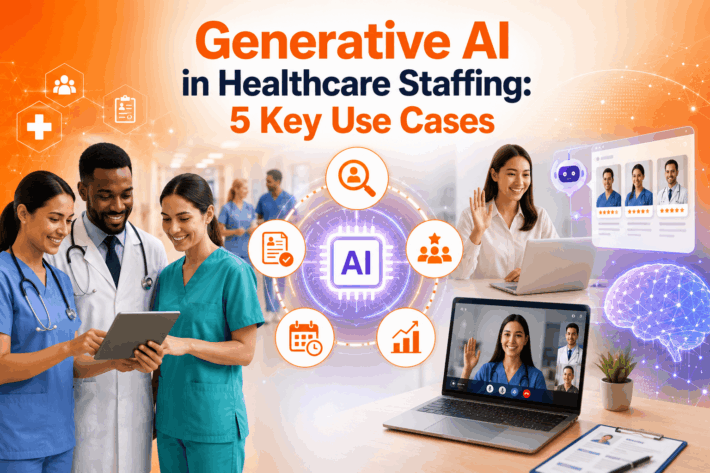
This blog explains five practical ways generative AI streamlines healthcare staffing, from resume screening and candidate communication to workforce forecasting, backed by 2025-2026 industry data.

improving-candidate-experience-using-ai
Insights

AI in Healthcare Staffing: How Agencies Are Improving Candidate Experience

August 6, 2026 Rajkumar R Comments Off on AI in Healthcare Staffing: How Agencies Are Improving Candidate Experience

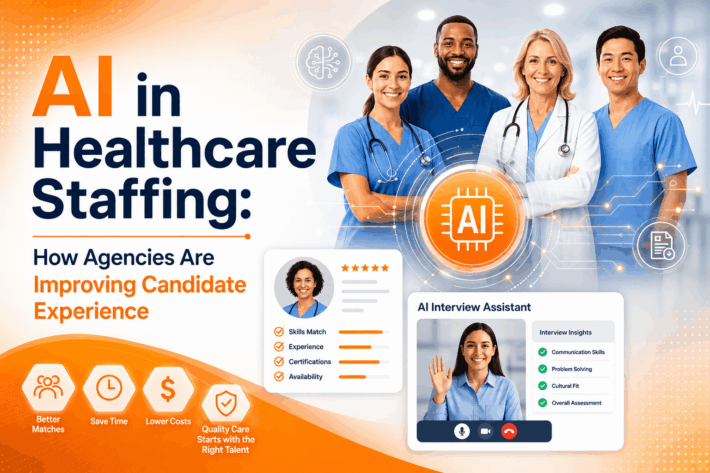
This post explains how AI tools such as chatbots, predictive matching, and automated credentialing help healthcare staffing agencies deliver a faster, more transparent candidate experience while addressing the projected U.S. nursing shortage.

roadmap-for-ai-in-healthcare-staffing
Insights

A Practical Roadmap for Implementing AI in Healthcare Staffing

August 6, 2026 Rajkumar R Comments Off on A Practical Roadmap for Implementing AI in Healthcare Staffing

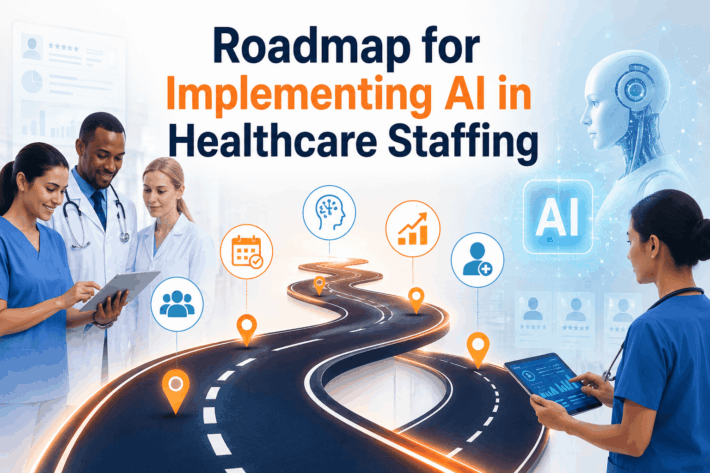
A step-by-step guide to implementing AI in healthcare staffing, covering benefits, challenges, a real-world pilot example, and FAQs for hospitals and staffing agencies.

VIVA USA Inc.
Services
  • Contingent Staffing
  • Offshore Staffing
  • Permenant Staffing
  • RPO (Recruitment Process Outsourcing)
  • Software Project Consulting
  • Data Cleansing
  • Payroll Services/EOR
Solutions
  • STARS - Supplier Success Portal
  • Custom Workflow SaaS
  • Global Capability Center (GCC)
Others
  • STARS - Supplier Success
  • Neuhire
  • Savvysoft Technologies
About Us
  • Who We Are
  • Awards & Recognition
  • Partnerships & Certifications
  • Career Benefits
  • Careers
  • Contract Vehicles
  • Insights

2025 © Copyright, VIVA USA Inc. All Rights Reserved.

  • Terms and Conditions
  • Privacy Policy
  • AI Usage Policy