Travel Nurses vs. Local Contingent Talent: What’s More Sustainable for Healthcare Staffing?
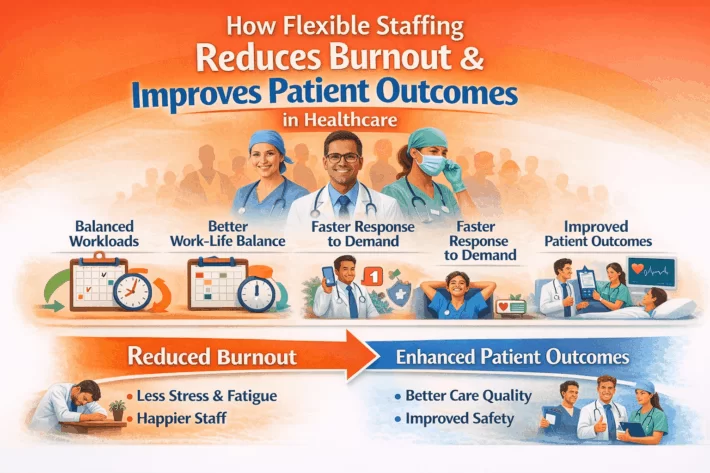
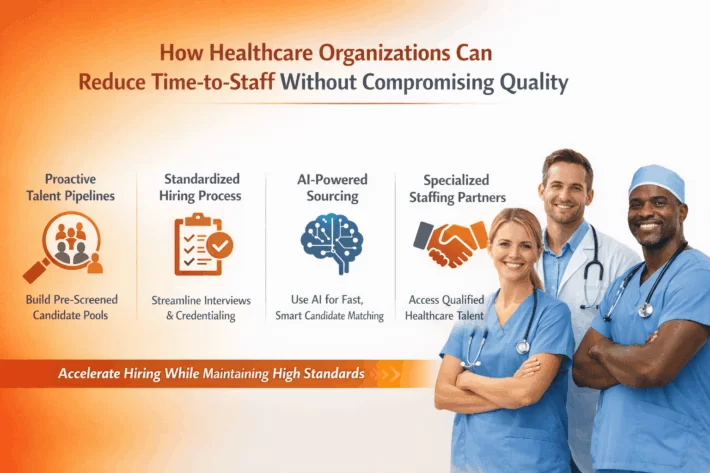
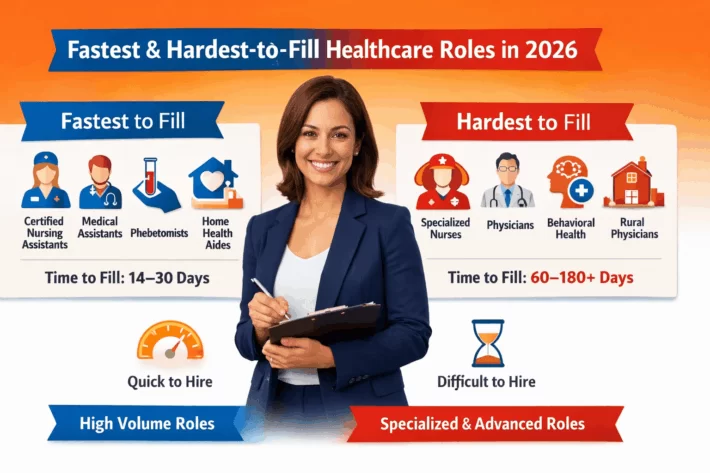
Travel nurses help hospitals quickly fill urgent staffing gaps, but relying heavily on them can be costly and difficult to sustain long-term. Many healthcare organizations are increasingly turning to local contingent talent and flexible staffing models to build a more stable, cost-effective workforce while still maintaining the agility needed to respond to fluctuating patient demand.
Why Healthcare Staffing Sustainability Matters in 2025
Healthcare organizations worldwide face a growing workforce crisis. Aging populations, clinician burnout, and fluctuating patient demand have made healthcare hiring more complex than ever.
Recent data highlights the scale of the problem:
- According to the Health Resources and Services Administration (HRSA), 2025, the U.S. could face a shortage of around 78,000 registered nurses.
- According to Staffing Industry Analysts (2025), the U.S. healthcare staffing market is projected to reach $64.5 billion, with travel nurse staffing accounting for over 47% of temporary healthcare labor spend.
- According to BetterNurse, 2024, the number of travel nurses in the U.S. grew 430% between 2018 and 2022, increasing from roughly 33,000 to about 175,000 nurses.
- According to the NSI National Health Care Retention & RN Staffing Report, 2024, hospitals pay an average of $102 per hour for travel nurses, which can be 2.5–4 times higher than permanent staff rates.
- According to AB Staffing Solutions industry data, 2024, the average travel nurse salary is about $103,695 annually, significantly higher than the average hospital RN salary.
These numbers show why healthcare systems are rethinking their staffing strategies and long-term workforce sustainability.
What Are Travel Nurses in Healthcare Staffing?
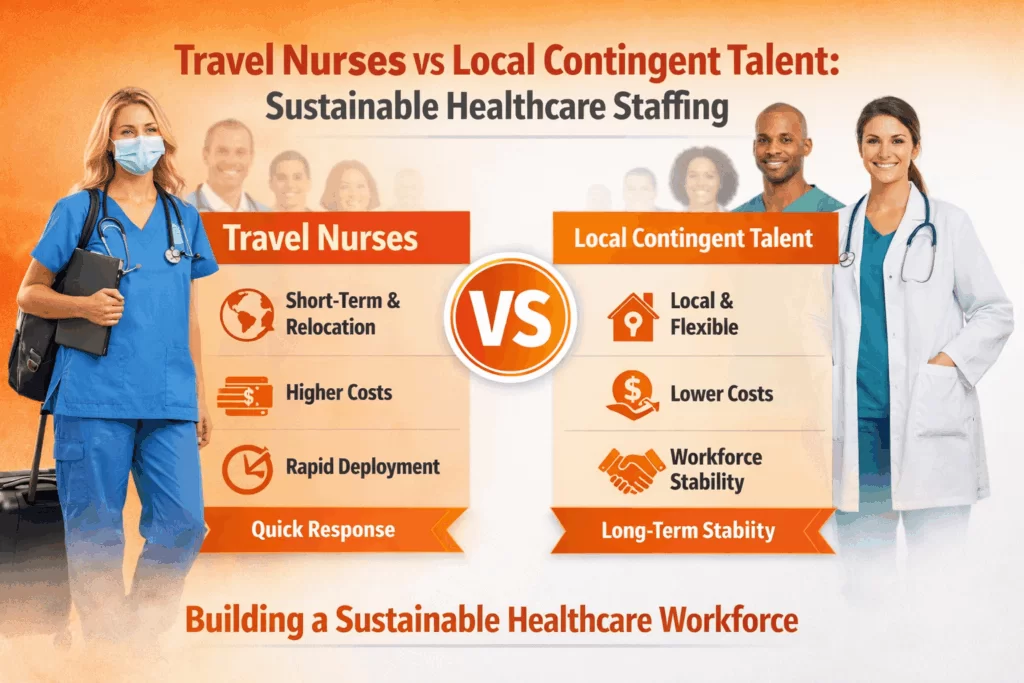
Travel nurses are registered nurses who accept short-term assignments, typically lasting 8–13 weeks, in hospitals or healthcare facilities experiencing staffing shortages. These nurses are usually hired through staffing agencies and relocate temporarily to meet urgent demand.
Key characteristics of travel nurses
- Short-term assignments (often 13 weeks)
- Higher pay and relocation stipends
- Fast deployment during crises or seasonal demand
- Typically hired through healthcare staffing agencies
Travel nursing became especially common during the COVID-19 pandemic when hospitals urgently needed experienced clinicians.
What Is Local Contingent Talent in Healthcare Hiring?
Local contingent talent refers to healthcare professionals who live near a facility and work flexible assignments without relocating. These professionals may include per diem nurses, contract clinicians, float pool staff, or locally sourced agency workers.
Examples of local contingent healthcare talent
- Per diem nurses
- Contract nurses and clinicians
- Float pool professionals
- Local staffing agency placements
This model gives hospitals flexibility similar to travel nurses while maintaining local workforce continuity.
Travel Nurses vs. Local Contingent Talent: Key Differences
Healthcare leaders evaluating sustainable staffing models often compare these two approaches.
| Feature | Traditional Hiring | Flexible Staffing |
|---|---|---|
| Workforce model | Fixed full-time staff | Mix of permanent and temporary staff |
| Ability to scale | Limited | Highly scalable |
| Response to demand | Slow | Rapid |
| Burnout risk | Higher | Lower |
| Staffing costs | Less predictable overtime | Optimized staffing budgets |
While travel nurses solve immediate shortages, local contingent staffing often supports long-term operational stability.
Benefits of Travel Nurses for Healthcare Staffing
Travel nurses play a critical role in the healthcare ecosystem, especially during emergencies.
1. Rapid response to staffing shortages
Travel nurses allow hospitals to quickly fill urgent vacancies during pandemics, disasters, or sudden patient surges.
2. Access to specialized skills
Facilities can temporarily hire nurses with specialized expertise such as:
- ICU nursing
- Emergency care
- Surgical nursing
- Critical care transport
3. Geographic workforce flexibility
Travel nurses can relocate to regions with severe shortages, helping distribute healthcare talent more evenly.
Challenges of Relying on Travel Nurses Long Term
Despite their value, travel nurses present several sustainability challenges.
1. Higher staffing costs
Hospitals often pay 2.5 to 4 times more for travel nurses compared with permanent staff, including agency fees and stipends.
Over time, these costs can strain hospital budgets.
2. Lower workforce continuity
Short-term assignments mean staff frequently rotate, which can affect:
- Team collaboration
- Patient continuity of care
- Organizational culture
3. Integration and onboarding challenges
Travel nurses must quickly adapt to:
- New clinical systems
- Hospital protocols
- Different patient populations
This learning curve can temporarily reduce efficiency.
Advantages of Local Contingent Talent in Healthcare Hiring
Many healthcare systems are shifting toward local contingent staffing models because they offer a more sustainable balance of flexibility and stability.
1. Lower long-term staffing costs
Without relocation stipends and travel premiums, local contingent staff typically cost less than travel nurses.
This allows hospitals to allocate budgets more effectively across patient care initiatives.
2. Stronger workforce stability
Local clinicians:
- Understand regional patient populations
- Build relationships with care teams
- Require less orientation
This improves workflow efficiency.
3. Faster deployment
Because local contingent workers already live nearby, they can often start assignments faster than travel nurses who must relocate.
4. Community workforce development
Local hiring strengthens regional healthcare ecosystems and reduces dependence on external labor markets.
Case Example: Hospitals Reducing Travel Nurse Dependence
Many health systems are investing in local workforce pipelines to reduce reliance on expensive travel staff.
For example, some U.S. healthcare systems are developing training programs with schools and community organizations to build local clinical talent pipelines. These programs aim to reduce long-term staffing costs and improve workforce stability.
At the same time, flexible staffing models such as per diem and internal float pools are becoming more common across hospitals.
When Travel Nurses Still Make Sense
Even with local staffing strategies, travel nurses remain essential in certain situations.
Ideal use cases
- Pandemic or disaster response
- Seasonal patient surges
- Temporary maternity or medical leave coverage
- Specialized clinical projects
- Rural hospital shortages
In these scenarios, travel nurses provide rapid, short-term workforce support that local staffing alone cannot always supply.
Key Takeaways: Travel Nurses vs. Local Contingent Talent
Quick facts for healthcare staffing leaders:
- Travel nurses are ideal for short-term, urgent staffing gaps.
- Local contingent talent supports long-term workforce sustainability.
- Travel nurses can cost 2.5–4x more than permanent staff.
- The travel nursing workforce has grown 430% since 2018, reflecting rising demand.
- Healthcare organizations increasingly use hybrid staffing models combining permanent staff, local contingent workers, and travel nurses.
The Future of Sustainable Healthcare Staffing
Healthcare organizations are moving toward balanced workforce strategies that combine flexibility with stability.
A sustainable healthcare staffing model often includes:
- Core permanent staff
- Local contingent talent for flexible coverage
- Travel nurses for emergencies and specialized needs
This hybrid approach reduces costs, improves workforce resilience, and ensures consistent patient care.
Conclusion
Travel nurses remain an essential part of modern healthcare staffing, especially during crises and sudden demand surges. However, relying heavily on travel nurses can create long-term financial and operational challenges. For many healthcare organizations, building a strong local contingent workforce offers a more sustainable staffing strategy while still maintaining the flexibility needed to adapt to changing patient volumes. Healthcare leaders who combine permanent staff, local contingent talent, and strategic travel nurse deployment will be best positioned to maintain stable, high-quality patient care.
Need Help Building a Sustainable Healthcare Workforce?
At VIVA USA, we help healthcare organizations develop flexible staffing solutions that balance cost, workforce stability, and rapid hiring needs.
Our healthcare staffing services include:
- Local contingent staffing
- Travel nurse placement
- Contract and per diem clinicians
- Workforce strategy consulting
Contact VIVA USA today to learn how we can help you build a sustainable healthcare workforce.