Solving the U.S. Healthcare Staffing Crisis: Key Problems and Practical Solutions

The U.S. healthcare industry is experiencing a staffing crisis unlike any in recent history.
Hospitals, clinics, long-term care centers, and even home health providers are struggling to recruit and retain the workforce they need. The result? Increased burnout, declining patient satisfaction, and growing concerns about care quality and accessibility. Yet, amid this crisis, the revenue in the Healthcare Providers market is expected to reach $3.24 trillion in 2025, with an annual growth rate (CAGR) of 3.70% projected from 2025-2029, leading to a market volume of $3.75 trillion by 2029.
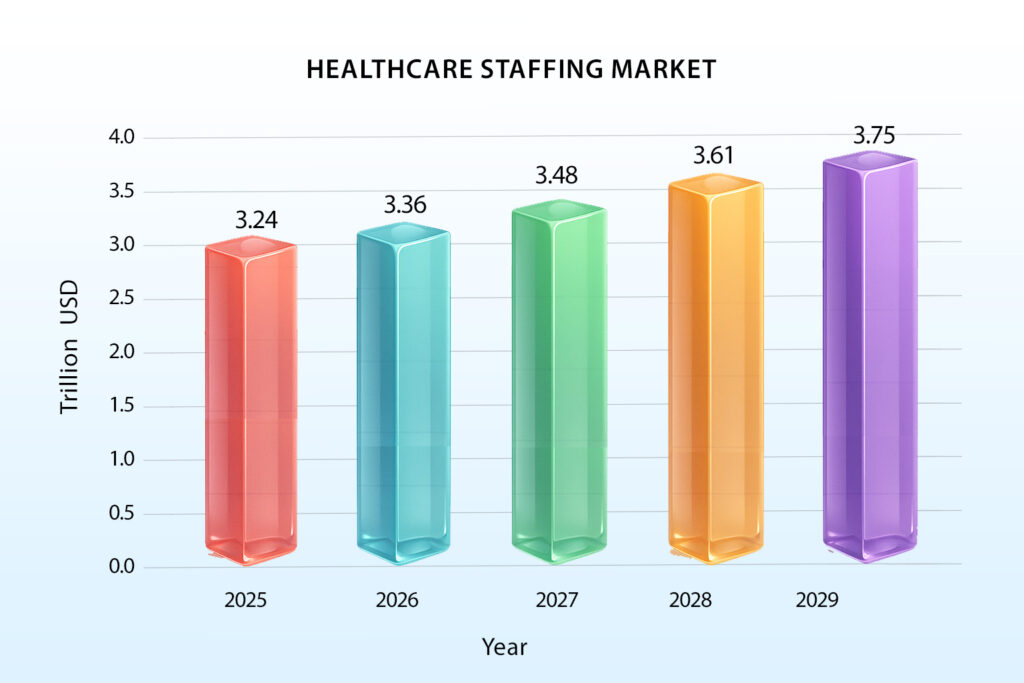
Data Source: statista.com
This explosive growth reflects not only the escalating demand for healthcare professionals but also the rising reliance on staffing partners, technology, and flexible workforce models to bridge critical gaps. In this blog, we take a closer look at the most common problems in U.S. healthcare staffing and offer practical, actionable solutions to help providers, HR leaders, and healthcare organizations navigate this complex landscape.
Problem 1: Critical Workforce Shortages
What’s Happening:
Across the board, healthcare providers are facing serious staffing shortages. According to the U.S. Bureau of Labor Statistics, an estimated 275,000 additional nurses will be needed by 2030. Similarly, the Association of American Medical Colleges predicts a shortage of up to 124,000 physicians by 2034.
Source: https://www.dol.gov/newsroom/releases/eta/eta20221003
This shortage is even more pronounced in rural areas and among specialized roles such as behavioral health professionals, respiratory therapists, and medical lab technologists.
Why It’s a Problem:
- Increased workloads on existing staff
- Longer wait times for patients
- Delays in diagnosis, treatment, and follow-up
- Higher risk of burnout and turnover
Practical Solutions:
- Invest in Training Pipelines: Partner with nursing schools, community colleges, and training programs to sponsor students, offer internships, and create clear pathways from education to employment.
- Support Legislative Efforts: Advocate for state and federal funding to expand class sizes, offer loan forgiveness, and improve access to healthcare education. .
- Utilize International Talent: Recruit foreign-trained nurses and clinicians through ethical global partnerships and provide relocation and cultural onboarding support.
Problem 2: Clinician Burnout and Job Dissatisfaction
What’s Happening:
Burnout levels are at an all-time high. According to a 2023 Medscape survey, over 60% of nurses and physicians report feeling burned out. The leading causes include unmanageable workloads, emotional exhaustion, and lack of administrative support.
Why It’s a Problem:
- Leads to higher turnover rates
- Reduces quality of patient care
- Lowers team morale
- Increases the cost of recruitment and retraining
Practical Solutions:
- Promote Work-Life Balance: Implement flexible scheduling, job-sharing, and part-time opportunities to help reduce stress.
- Implement Wellness Programs: Offer mental health resources, peer support groups, and access to counseling services.
- Streamline Administrative Tasks: Use EHR optimization, AI tools, and medical scribes to reduce documentation burdens and let clinicians focus on patient care.
Problem 3: Geographic Imbalances in Staffing
What’s Happening:
Rural and underserved urban areas face major challenges in attracting and retaining healthcare workers. Professionals often prefer to work in larger cities with more amenities, resources, and career development opportunities.
Why It’s a Problem:
- Rural hospitals struggle to stay open
- Patients in remote areas may travel hours for basic care Increases healthcare inequity across populations
Practical Solutions:
- Offer Location-Based Incentives: Provide bonuses, relocation packages, housing assistance, or student loan repayment for staff willing to work in underserved areas.
- Invest in Telehealth Infrastructure: Allow specialists and physicians to serve rural patients remotely, reducing the need for physical presence. .
- Develop Rural Training Tracks: Encourage healthcare students to complete rotations or residencies in rural areas to improve retention rates post-graduation.
Problem 4: High Turnover and Low Retention
What’s Happening:
The healthcare industry is grappling with some of the highest turnover rates in the labor market—especially among nurses and entry-level positions like CNAs and medical assistants.
Why It’s a Problem:
- Increased costs of recruiting and onboarding
- Disrupts continuity of care
- Reduces patient and staff satisfaction
- Strains existing staff who must cover gaps
Practical Solutions:
- Improve Onboarding and Mentorship: Strong orientation and peer mentorship help new hires feel supported and reduce early exits.
- Offer Clear Career Progression: Provide upskilling, training programs, and internal mobility so employees can see long-term growth in their roles. .
- Regular Engagement and Feedback: Conduct stay interviews and employee satisfaction surveys to address issues before they lead to resignations.
Problem 5: Overdependence on Travel and Temp Workers
What’s Happening:
Many hospitals turned to travel nurses and temporary staff during the COVID-19 pandemic to fill urgent needs. While effective in the short term, this model has become financially unsustainable and disruptive to team cohesion.
Why It’s a Problem:
- High costs for healthcare systems
- Lack of continuity in patient care
- Tensions between permanent and temporary staff
- Short-term fixes that don’t solve long-term needs
Practical Solutions:
- Build Internal Float Pools: Train a pool of staff who can float across departments or locations when needs arise.
- Use Temp-to-Hire Programs: Bring in temp staff with the goal of converting them to permanent roles if they’re a good fit.
- Create Regional Staffing Hubs: Collaborate with other hospitals in the same health system to share a pool of flexible, shared staff.
Problem 6: Credentialing and Onboarding Delays
What’s Happening:
Lengthy credentialing and onboarding processes can delay hiring by weeks or even months, especially for licensed professionals like nurses, physicians, and allied health workers.
Why It’s a Problem:
- Missed opportunities to hire strong candidates
- Delays in filling urgent roles
- Frustration for both employers and job seekers
Practical Solutions:
- Digitize the Credentialing Process: Use cloud-based platforms to track license verifications, reference checks, and background screenings in real time.
- Pre-qualify Talent Pools: Work with staffing agencies to maintain a pool of fully vetted, ready-to-deploy professionals.
- Streamline Onboarding: Use e-learning tools, virtual orientation, and digital forms to onboard new hires more efficiently.
Problem 7: Limited Use of Staffing Technology
What’s Happening:
Many healthcare organizations still rely on outdated systems or manual processes for recruitment, scheduling, and workforce planning, which hampers agility.
Why It’s a Problem:
- Slow response to changing staffing needs
- Poor visibility into workforce trends
- Missed opportunities to optimize scheduling and cost control
Practical Solutions:
- Adopt Workforce Management Platforms: Leverage AI-powered platforms that forecast staffing needs, automate scheduling, and track performance.
- Use Predictive Analytics: Plan ahead for seasonal surges, turnover risks, and training needs based on data insights.
- Integrate HR Tech Ecosystems: Connect recruiting, onboarding, training, and retention tools in one platform for seamless management.
Conclusion: A Strategic, People-First Approach Is Key
Healthcare staffing challenges are not going away—but they can be managed with proactive, people-focused strategies. Whether you’re a hospital administrator, HR leader, or staffing firm, the path forward requires:
- Investing in education and training pipelines
- Creating supportive, flexible work environments
- Leveraging technology to optimize processes
- Partnering with staffing experts who understand the industry
At VIVA IT USA, we specialize in customized healthcare staffing solutions—connecting providers with the talent they need while promoting workforce stability and patient satisfaction. Let’s solve the staffing crisis together.