How Flexible Staffing Reduces Burnout and Improves Patient Outcomes in Healthcare
Healthcare organizations increasingly adopt flexible staffing to address workforce shortages, reduce clinician burnout, and improve patient outcomes. Flexible staffing allows hospitals to adjust workforce levels using temporary clinicians, travel nurses, or contract professionals, ensuring patient demand is met without overloading permanent staff. The result is improved staff well-being, better care quality, and more efficient healthcare operations.
Quick Facts: Flexible Staffing and Healthcare Workforce Trends
- 50% of healthcare workers reported feeling burned out, according to the Mayo Clinic Well-Being Index via Becker’s Hospital Review (2024).
- A JAMA Network Open study (2025) found burnout among U.S. healthcare workers rose to 39.8% in 2022 before declining slightly to 35.4%, highlighting the need for workforce solutions.
- According to Nurse.com’s Salary and Work-Life Report (2025), 23% of nurses are considering leaving the profession due to burnout.
- The CDC (2024) notes that healthcare systems must implement strategies such as better staffing models and workload management to improve workforce wellbeing.
These statistics demonstrate why hospitals are turning to flexible healthcare staffing models to stabilize their workforce.
What Is Flexible Staffing in Healthcare?
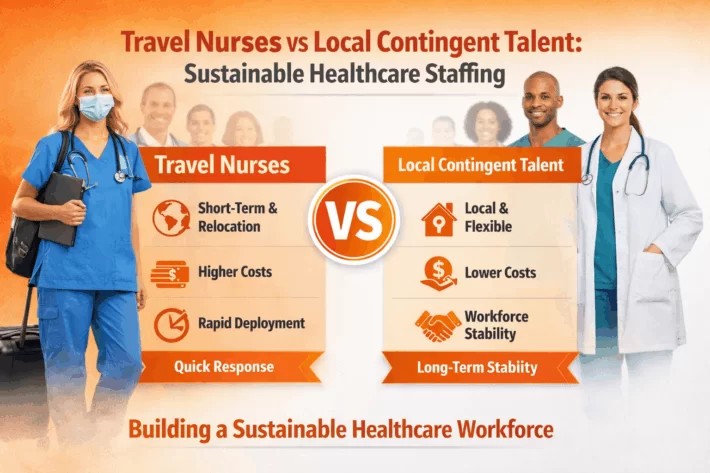
Flexible staffing in healthcare is a workforce strategy that adjusts staffing levels based on patient demand using temporary, contract, per-diem, or travel healthcare professionals.
This model allows hospitals and clinics to maintain safe staffing ratios without overworking full-time staff.
Common Flexible Staffing Models
Healthcare organizations typically use several approaches:
- Travel nurses and clinicians
- Per-diem staffing
- Contract healthcare professionals
- Staff augmentation through staffing partners
- Float pools and internal flexible teams
These models ensure that patient care continues even during seasonal surges, staffing shortages, or emergencies.
Why Burnout Is a Growing Crisis in Healthcare Staffing
Healthcare burnout has become one of the most pressing challenges in modern healthcare systems.
Major Causes of Burnout in Healthcare
- Chronic staffing shortages
- Long shifts and overtime
- Emotional stress from patient care
- Administrative workload
- Lack of work-life balance
According to the American Hospital Association workforce scan (2024), healthcare professionals face increasing pressure due to rising patient demand, workforce shortages, and administrative burdens.
When burnout rises, it directly affects patient care quality and safety.
How Flexible Staffing Reduces Burnout Among Healthcare Workers
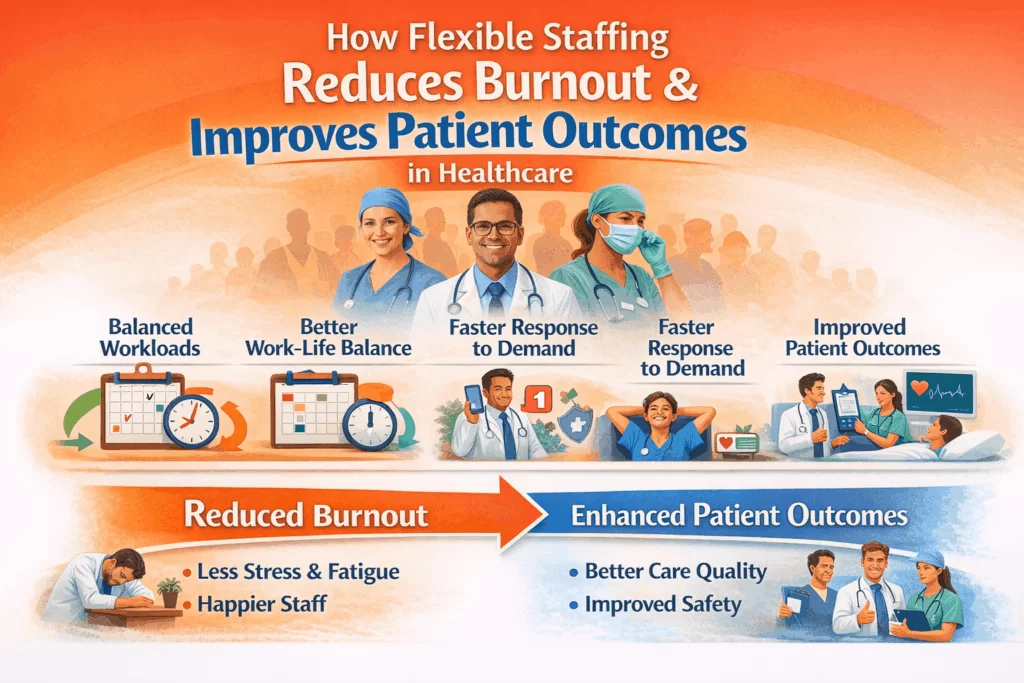
Flexible staffing helps healthcare organizations distribute workloads more evenly and create sustainable work environments.
1. Balanced Workloads for Clinicians
Flexible staffing reduces burnout by ensuring adequate staff coverage, preventing excessive workloads and long shifts for full-time clinicians.
Hospitals that maintain proper staffing levels reduce stress and fatigue among healthcare professionals.
For example:
- Additional nurses during peak demand reduce patient-to-nurse ratios
- Contract staff cover shifts during absences
- Temporary staff help manage seasonal patient surges
This prevents permanent staff from being overworked.
2. Improved Work-Life Balance for Healthcare Professionals
Flexible staffing allows clinicians to choose schedules that better fit their lives.
Benefits include:
- Short-term contracts
- Adjustable schedules
- Reduced overtime
- Flexible shift selection
Many healthcare workers prefer flexible roles because they offer greater autonomy and better work-life balance.
This flexibility helps reduce burnout and improve job satisfaction.
3. Faster Response to Patient Demand
Hospitals often experience unpredictable patient volumes.
Flexible staffing allows healthcare systems to quickly adjust workforce levels during:
- Flu season
- Public health emergencies
- Sudden patient surges
- Staff absences
Instead of overloading existing staff, organizations can deploy temporary professionals.
How Flexible Staffing Improves Patient Outcomes
Patient outcomes are closely tied to staffing levels and clinician well-being.
Better Nurse-to-Patient Ratios
Flexible staffing improves patient outcomes by maintaining safe nurse-to-patient ratios, which reduces medical errors, improves monitoring, and enhances patient safety.
When healthcare workers are not overwhelmed, they can provide more attentive care.
Research consistently shows that appropriate staffing levels lead to:
- Fewer patient complications
- Lower mortality rates
- Faster recovery times
- Higher patient satisfaction
Reduced Medical Errors
Burnout increases the risk of mistakes.
Fatigue and stress can affect:
- Clinical judgment
- Medication administration
- Documentation accuracy
- Patient communication
Flexible staffing helps ensure clinicians remain alert and focused.
Higher Quality Patient Care
When clinicians are supported by adequate staffing, they can spend more time with patients.
This leads to:
- Better patient communication
- Improved treatment adherence
- More accurate diagnoses
- Stronger patient trust
Ultimately, patients receive safer and more compassionate care.
Flexible Staffing vs Traditional Healthcare Hiring
| Feature | Traditional Hiring | Flexible Staffing |
|---|---|---|
| Workforce model | Fixed full-time staff | Mix of permanent and temporary staff |
| Ability to scale | Limited | Highly scalable |
| Response to demand | Slow | Rapid |
| Burnout risk | Higher | Lower |
| Staffing costs | Less predictable overtime | Optimized staffing budgets |
Flexible staffing allows hospitals to maintain stability even when patient demand fluctuates.
Real-World Examples of Flexible Staffing in Healthcare
Healthcare organizations worldwide are adopting flexible staffing models to solve workforce shortages.
Example 1: Travel Nurse Programs
Many hospitals rely on travel nurses during high-demand periods.
Benefits include:
- Rapid workforce deployment
- Coverage during shortages
- Reduced overtime for permanent staff
Example 2: Staff Augmentation Partnerships
Healthcare systems partner with staffing agencies to access pre-qualified clinicians.
These partnerships provide:
- On-demand staffing
- Faster hiring cycles
- Access to specialized professionals
Example 3: Float Pools
Some hospitals maintain internal flexible teams that move between departments.
Advantages include:
- Reduced scheduling gaps
- Cross-trained staff
- Faster coverage during emergencies
Long-Term Benefits of Flexible Healthcare Staffing
Healthcare organizations that adopt flexible staffing gain both operational and clinical advantages.
Organizational Benefits
- Reduced turnover rates
- Lower recruitment costs
- Improved workforce retention
- Faster hiring cycles
Workforce Benefits
- Better work-life balance
- Higher job satisfaction
- Reduced burnout
- Increased career flexibility
Patient Benefits
- Improved safety
- Better care quality
- Shorter hospital stays
- Higher satisfaction scores
Best Practices for Implementing Flexible Staffing
Healthcare leaders must implement flexible staffing carefully to maximize benefits.
Key Strategies
1. Use data-driven workforce planning
Analyze patient volume trends and staffing needs.
2. Partner with experienced healthcare staffing providers
Reliable partners help hospitals access qualified professionals quickly.
3. Maintainclear onboarding processes
Temporary clinicians should receive quick training to integrate smoothly.
4. Use technology for scheduling
AI-driven workforce tools can optimize shift planning and coverage.
5. Monitor staff wellbeing
Regular feedback helps ensure staffing strategies truly reduce burnout.
Key Takeaways
- Flexible staffing helps healthcare organizations reduce clinician burnout and improve patient outcomes.
- Nearly 50% of healthcare workers report burnout, highlighting the need for better staffing strategies.
- Flexible staffing ensures safe patient-to-staff ratios and better workload distribution.
- Hospitals can quickly scale workforce levels during patient surges or staffing shortages.
- Ultimately, flexible staffing improves care quality, employee retention, and operational efficiency.
Conclusion
Healthcare burnout and staffing shortages are two of the biggest challenges facing modern healthcare systems. Flexible staffing offers a practical solution by allowing hospitals and clinics to adapt workforce levels based on patient demand. By reducing clinician overload, improving work-life balance, and maintaining safe staffing ratios, flexible staffing helps healthcare organizations deliver better patient outcomes while supporting the well-being of their workforce.
Need reliable healthcare staffing solutions?
VIVA USA helps healthcare organizations access qualified professionals through flexible staffing models, staff augmentation, and on-demand hiring. Contact VIVA USA today to build a resilient healthcare workforce and ensure high-quality patient care.