AI-Powered End-to-End Hiring: What Companies Need to Know
Hiring has never been more complex. Traditional recruitment practices, such as piles of resumes, endless sourcing, and long interview cycles, no longer keep up with the pace businesses demand today. Companies need to move quickly, find the right people, control costs, and stay compliant, all while delivering a positive candidate experience.
This is where AI-powered end-to-end hiring strategies come in. By applying artificial intelligence across the entire hiring journey (from posting a job to onboarding new employees), organizations can reduce inefficiencies, make better decisions, and stay ahead in a competitive talent market.
In this article, we will explore what AI-powered hiring really means, the benefits it offers, common challenges to watch out for, and why adopting it now can set companies up for long-term success.
What is AI-Powered End-to-End Hiring?
End-to-end hiring means looking at recruitment as one continuous process rather than a series of disconnected steps. Instead of treating sourcing, screening, interviews, and onboarding separately, it connects them into one smooth system.
Now, add AI into the mix, and that process becomes smarter. Technologies like machine learning, natural language processing, and predictive analytics help companies quickly identify the right candidates, reduce bias, and scale hiring without sacrificing quality.
In simple terms, while AI takes care of repetitive tasks such as resume reviews, interview scheduling, and data analysis, recruiters can focus on what they do best: building relationships and making thoughtful hiring decisions.
The Benefits of AI in End-to-End Hiring
1. Faster Time-to-Fill
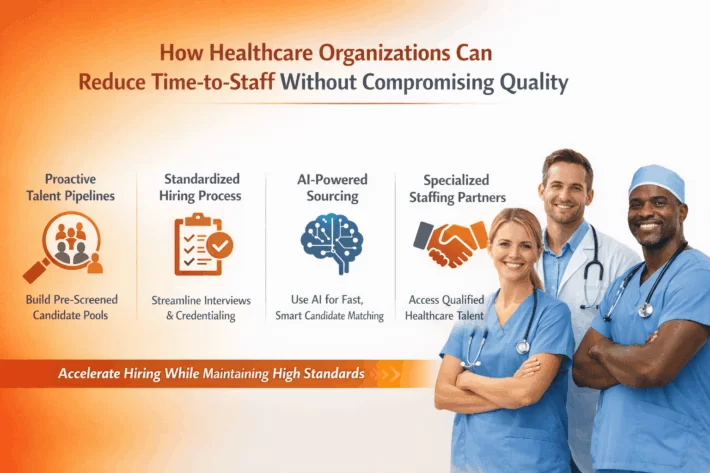
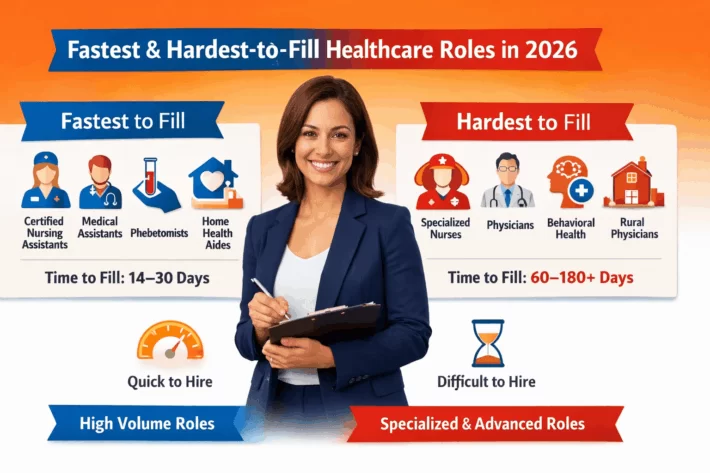
AI can cut weeks off the hiring process. Automated resume screening, scheduling, and candidate matching free recruiters from time-consuming tasks. This is especially valuable in fields like IT, healthcare, and engineering, where skilled talent is often hard to find and delays can stall entire projects.
2. Better Quality of Hire
AI platforms go beyond keyword searches. They evaluate skills, experience, and even cultural alignment to suggest candidates who are more likely to succeed and stay. That means fewer mismatches and stronger long-term hires.
3. Lower Costs
By reducing reliance on manual processes and minimizing bad hires, companies save significantly on recruitment costs. Recruiters can dedicate their time to higher-value work instead of administration.
4. Flexible and Scalable Hiring
Whether a business needs to ramp up quickly for a project or scale down after completion, AI supports models like contingent staffing, project-based hiring, or MSP integration in a more efficient and adaptable way.
5. A Better Candidate Experience
Candidates no longer want to wait weeks for feedback. AI-powered chatbots, faster communication, and personalized job recommendations make applicants feel engaged and supported from the very beginning.
Where AI Fits in the Hiring Journey
AI touches nearly every stage of recruitment:
1. Job Description Creation
AI tools make postings clearer and more appealing. For instance, Textio highlights words that might unintentionally discourage certain groups and suggests alternatives, while Eightfold AI helps companies craft job ads that reflect market demand and company culture.
2. Talent Sourcing
Platforms like HireVue, Entelo, and SeekOut uncover talent from large databases, social networks, and even passive candidate pools. They can also predict which candidates are most likely to respond, saving recruiters time and effort.
3. Resume Screening
Instead of manually reviewing stacks of resumes, AI tools such as Harver, Ideal, and LinkedIn Recruiter automatically highlight top candidates based on skills and requirements. This ensures consistency and reduces bias in the shortlist.
4. Interviewing
AI-powered platforms like HireVue, Modern Hire, and myInterview analyze responses during video interviews to identify communication strengths, problem-solving abilities, and cultural fit. A well-known example is Unilever, which adopted HireVue AI video assessments combined with Pymetrics games. The company cut screening time by 75 percent and improved diversity in hiring.
5. Onboarding and Retention
AI continues to play a role after the hire. Tools like ServiceNow HRSD and Enboarder guide new employees through paperwork, training, and company orientation with digital assistants and reminders. For retention, platforms such as Workday, Visier, and IBM Watson Talent analyze engagement data and predict which employees might be at risk of leaving. IBM reports that its Watson Talent system has achieved up to 95 percent accuracy in predicting attrition.
Addressing Concerns with AI in Hiring
1. Bias and Fairness
AI is only as good as the data it learns from. If the data is biased, the results will reflect that bias. It is important to use diverse datasets and conduct regular bias checks to ensure fairness.
2. The Human Touch Still Matters
AI is a powerful assistant, but it should not replace human judgment. Recruiters bring empathy, cultural understanding, and intuition that no machine can replicate. The best approach is a blend of AI efficiency and human connection.
3. Privacy and Compliance
Using candidate data requires strict compliance with regulations such as GDPR, EEOC, and CCPA. Companies must also prioritize transparency and data security to maintain trust.
The Future of AI in Hiring
AI in recruitment is still evolving, and the future will bring even more innovation. For example:
- Predictive workforce planning: anticipating hiring needs before they arise.
- Internal mobility: identifying and reskilling current employees for new roles.
- Seamless MSP and VMS integration: making contingent staffing more efficient.
- Personalized candidate journeys: tailoring every step of the process to individual applicants.
Organizations that embrace these innovations now will be better positioned to build agile, future-ready teams.
Why Companies Should Act Now
- Talent shortages are real. In-demand skills, especially in IT and healthcare, are harder than ever to secure. Acting quickly is essential.
- Candidate expectations have changed. Job seekers want quick responses, mobile-friendly applications, and transparent communication.
- Workforce models are shifting. Hybrid work, contingent staffing, and project-based hiring require more flexibility than ever before.
- The ROI is proven. Faster hiring, better quality, and cost savings all contribute directly to stronger business performance.
Conclusion
AI-powered end-to-end hiring is not just another trend. It is quickly becoming the future of how companies attract and retain talent. By weaving AI into every stage of recruitment, businesses can hire faster, smarter, and more fairly while also improving the candidate experience.
The most successful strategies will balance AI efficiency with human insight. Recruiters remain essential for building relationships, evaluating cultural fit, and ensuring fairness. Together, people and AI create a hiring process that is both efficient and human-centric.
At VIVA USA Inc., we specialize in flexible hiring models including contingent staffing, staff augmentation, and MSP integration. By combining advanced technology with human expertise, we help businesses achieve true end-to-end hiring success.