From Crisis to Stability: A Roadmap to Strengthen Your Healthcare Workforce
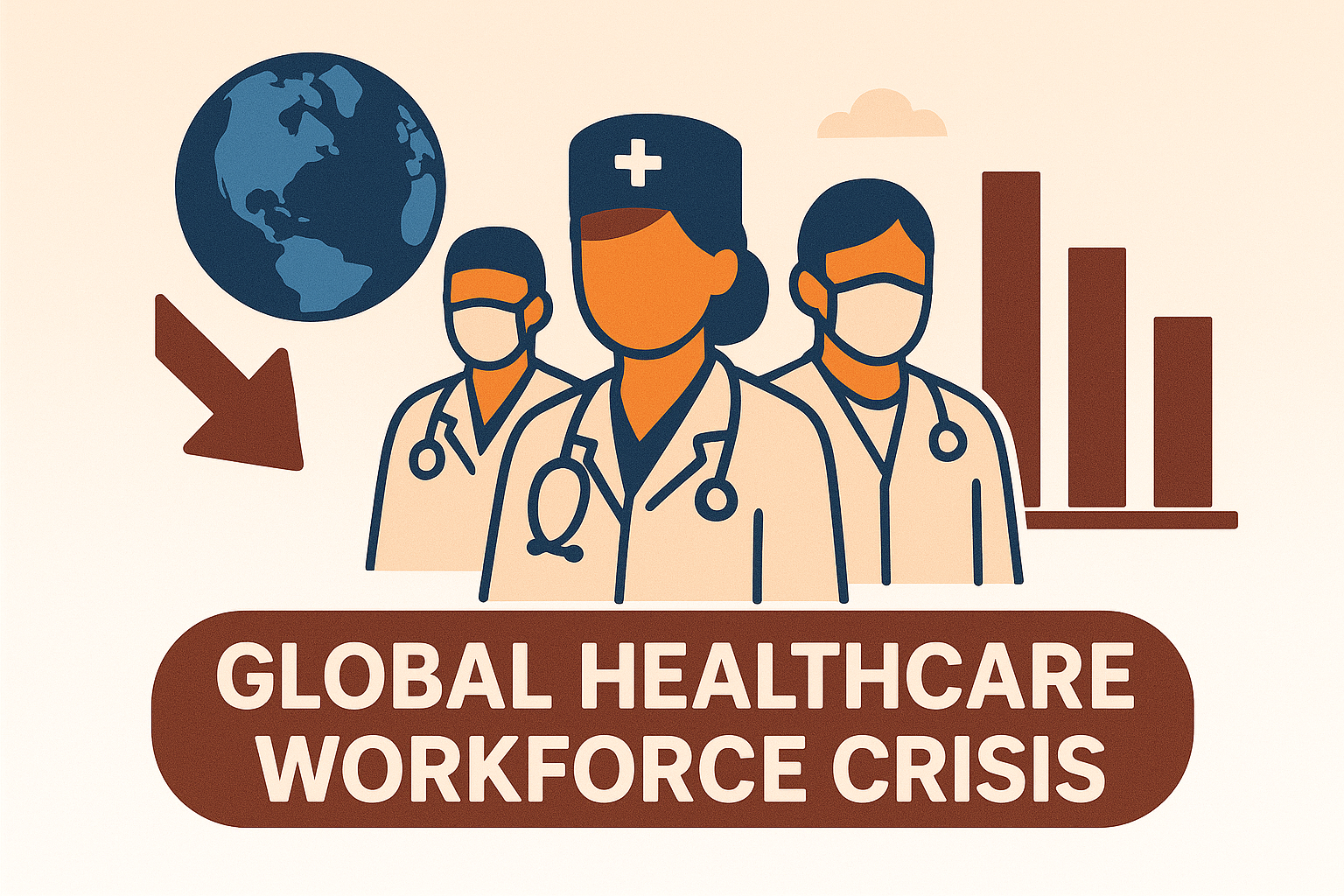
The healthcare industry is at a tipping point. Workforce shortages, burnout, and high turnover — once simmering issues — have escalated into a full-scale crisis, jeopardizing the quality and consistency of patient care. Add to that a rapidly aging workforce, and the urgency to act becomes even clearer.
Nearly 50% of registered nurses in the U.S. are over the age of 52, and the average age of a practicing physician is over 53, with many specialists well into their 60s. The impending wave of retirements will only exacerbate existing staffing gaps, leaving healthcare systems struggling to maintain care standards and continuity.
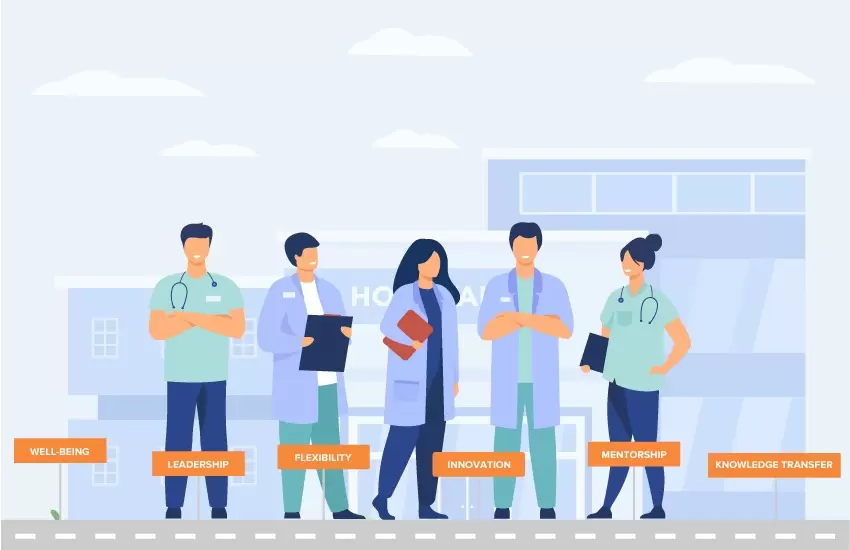
But crisis does not have to define the future. With a strategic, multi-step approach, healthcare organizations can transition from instability to resilience. Here’s a comprehensive roadmap to strengthen your healthcare workforce — today and for the long haul.
10 Strategic Steps to Future-Proof Your Healthcare Workforce
Step 1: Assess the Current State of Your Workforce
Before solutions can be deployed, it’s essential to diagnose the problem.
Key Actions:
- Perform a workforce demographic analysis to identify aging segments and high-retirement-risk roles.
- Use exit interview data and employee surveys to understand turnover drivers.
- Map clinical and operational staffing needs by department and shift.
Why it matters: With a large percentage of clinicians nearing retirement, workforce planning must be proactive — not reactive.
Step 2: Prioritize Workforce Well-Being and Burnout Prevention
Burnout remains a leading cause of attrition in healthcare. Employees are looking for more than a paycheck — they want respect, balance, and support.
Key Actions:
- Launch comprehensive mental health and wellness programs.
- Offer flexible scheduling and eliminate mandatory overtime where possible.
- Integrate resilience training, peer support groups, and stress-reduction tools.
Impact: Supporting staff well-being helps prevent early retirements and keeps mid-career professionals engaged longer.
Step 3: Redesign Staffing Models for Flexibility
Rigid staffing models don’t align with the evolving needs of today’s workforce.
Key Actions:
- Introduce float pools, flexible shifts, and job-sharing arrangements.
- Employ telehealth roles for semi-retired physicians or nurses.
- Use predictive analytics to optimize staffing based on patient volume trends.
Opportunity: Aging professionals may prefer reduced hours or hybrid roles — keeping them involved without full-time demands.
Step 4: Build Strong Talent Pipelines
As retirements loom, healthcare systems must invest in growing their next-generation workforce.
Key Actions:
- Partner with local nursing schools and medical programs to create clinical rotations and pre-hire tracks.
- Offer scholarships, loan forgiveness, and tuition assistance for hard-to-fill roles.
- Develop programs for career changers and non-traditional students to enter healthcare roles.
Why it’s essential: With half the nurse workforce approaching retirement, the talent pipeline must be wide and well-supported.
Step 5: Empower Career Growth and Internal Mobility
Staff retention improves when employees can envision long-term careers within the organization.
Key Actions:
- Create clinical ladders for nursing and allied health professionals.
- Offer cross-training opportunities and leadership development programs.
- Use mentorships to prepare mid-level staff for advanced roles.
Long-term value: Promoting from within helps backfill positions vacated by retirees and retains organizational knowledge.
Step 6: Invest in Leadership and Culture
Healthcare organizations must foster leaders who are communicative, supportive, and committed to building trust.
Key Actions:
- Train managers in inclusive leadership and emotional intelligence.
- Recognize and reward behaviors that support retention and collaboration.
- Engage employees in shaping workplace culture through committees and feedback loops.
Impact: Strong leaders reduce turnover, improve morale, and retain seasoned staff who might otherwise leave early.
Step 7: Embrace Technology to Ease Workload
Administrative overload is a top complaint among healthcare workers, especially those approaching retirement.
Key Actions:
- Automate repetitive tasks like scheduling, reporting, and documentation.
- Improve EHR usability to reduce time spent on clerical duties.
- Use virtual assistants and AI tools to augment clinical workflows.
Result: Reducing tech-related frustrations helps extend the careers of older professionals and attracts younger tech-savvy staff.
Step 8: Foster a Culture of Inclusion and Belonging
To retain a diverse workforce across generations, healthcare environments must be welcoming and inclusive.
Key Actions:
- Promote a respectful, inclusive workplace through clear values and consistent leadership behaviors.
- Encourage cross-generational knowledge sharing, such as reverse mentoring between senior and junior team members.
- Recognize and appreciate the unique experiences and contributions of all staff.
Goal: A culture of belonging encourages engagement, loyalty, and retention across every age group and career stage.
Step 9: Capture Knowledge Before It Walks Out the Door
With so many experienced professionals nearing retirement, knowledge loss is a real and present danger.
Key Actions:
- Develop knowledge transfer programs through mentoring, documentation, and job shadowing.
- Use exit interviews to collect insights from departing staff.
- Rehire retirees part-time as educators, consultants, or trainers.
Strategy: Preserve institutional memory and pass on best practices to new team members.
Step 10: Continuously Monitor and Adapt
Effective workforce strategies are dynamic, not static.
Key Actions:
- Track key metrics like retention rates, employee satisfaction, and skills gaps.
- Use real-time dashboards and predictive analytics to drive decision-making.
- Stay agile with policies that reflect changing employee needs and labor market realities.
End Goal: Build a living, evolving workforce plan grounded in data and responsive leadership.
Conclusion
Healthcare workforce challenges aren’t just a result of short-term shocks. They’re part of long-standing trends — none more pressing than the aging out of experienced professionals. With nearly half of U.S. nurses over 52 and physicians averaging over 53, the urgency for proactive action is clear.
But crisis doesn’t have to be permanent. By investing in well-being, flexibility, mentorship, and succession planning, healthcare leaders can transition from a place of vulnerability to one of strength and sustainability.
The future of care starts with the people who provide it — let’s take care of them, so they can take care of us.