The Role of MSP/VMS in Modern Procurement: What to Know Before Partnering
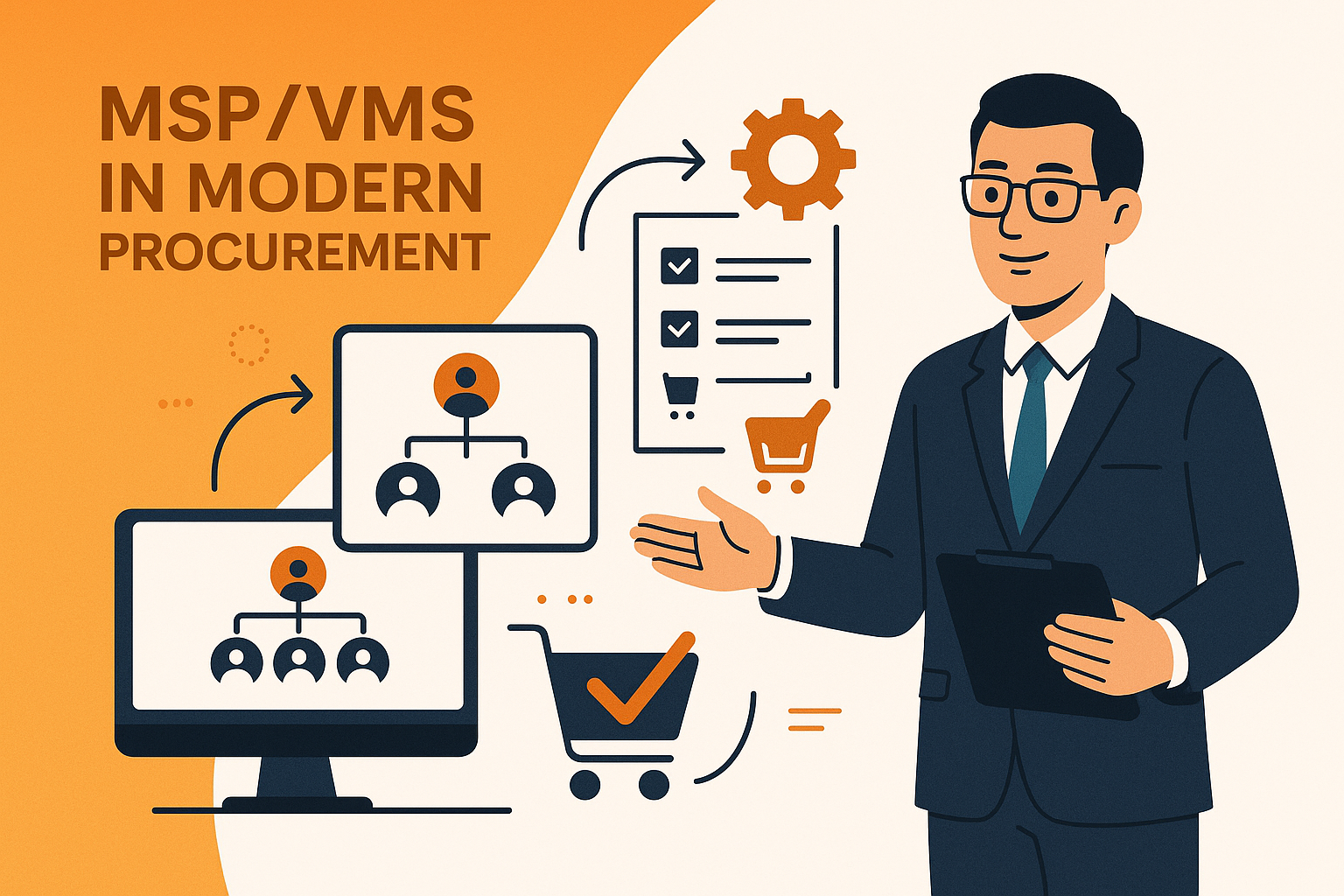
Procurement has evolved far beyond negotiating supplier contracts and managing purchase orders. In today’s competitive landscape, talent acquisition and workforce management are just as critical to business success as supply chain efficiency. For many organizations, Managed Service Providers (MSPs) and Vendor Management Systems (VMSs) have become essential to streamline staffing, ensure compliance, and gain visibility into contingent workforce spending.
If your organization is exploring MSP or VMS partnerships, here is what you need to know before taking the leap.
What is an MSP in Procurement?
A Managed Service Provider (MSP) is a third-party firm that manages an organization’s contingent workforce program. Acting as an extension of procurement and HR, the MSP coordinates staffing suppliers, ensures compliance, and provides workforce insights.
Core responsibilities of an MSP include:
- Managing supplier relationships and performance.
- Streamlining requisition and approval workflows.
- Overseeing compliance with labor laws and company policies.
- Delivering consolidated reporting and spend visibility.
- Providing talent market benchmarks.
Example: Imagine a financial services company that relies on hundreds of IT contractors during tax season. Without an MSP, every department might use different staffing vendors with inconsistent rates and contracts. An MSP consolidates all vendors under one program, ensures rate consistency, and provides procurement with a single view of total contractor spend.
What is a VMS?
A Vendor Management System (VMS) is the technology platform that supports the MSP program. It automates manual processes tied to contingent workforce management and provides transparency into costs and performance.
Key capabilities of a VMS include:
- Centralized requisition and approval workflows.
- Real-time visibility into job postings, candidate submissions, and placements.
- Rate card management and billing transparency.
- Compliance tracking for certifications and onboarding.
- Analytics dashboards for workforce spend and diversity.
Example: A manufacturing company using a VMS can see, in real time, which suppliers are submitting candidates fastest and which are charging above-average rates. That insight allows procurement managers to negotiate better terms and select suppliers that consistently deliver quality talent.
Why Procurement Leaders Should Care
Contingent labor often makes up 30 to 40 percent of a company’s workforce. Without structured management, this category can quickly become fragmented and risky.
Benefits of MSP/VMS for procurement leaders:
- Cost savings: For example, a retailer with seasonal hiring needs can use a VMS to standardize pay rates for warehouse workers across multiple states, avoiding inflated costs from local vendors.
- Improved compliance: A healthcare provider can track nursing certifications and ensure every contract worker meets state licensing requirements before they start.
- Supplier performance: With analytics, a procurement manager at a technology company can identify which staffing vendors provide candidates within 48 hours and which consistently lag.
- Scalability: A logistics company can quickly add 200 temporary drivers during peak holiday season, with the MSP ensuring suppliers meet background and safety standards.
Key Considerations Before Partnering with MSP/VMS
When selecting an MSP or VMS partner, procurement teams should look at several factors:
1. Program Scope
- Does the MSP handle specialized roles such as engineers, IT specialists, or healthcare workers?
- Example: A government contractor might require suppliers with security-cleared candidates, which not every MSP can support.
2. Technology Fit
- Is the VMS user-friendly for hiring managers and suppliers?
- Example: If the VMS is too complex, line managers in a construction firm may bypass it, leading to off-contract hires and compliance risks.
3. Supplier Ecosystem
- Does the MSP bring relationships with suppliers that can meet your diversity and niche skill requirements?
- Example: A pharmaceutical company may need suppliers who can quickly source lab technicians with specialized certifications.
4. Governance and Reporting
- Does the system provide the right visibility into costs and performance?
- Example: Procurement leaders should be able to track spend by department, location, or project, and pull quarterly reports to show cost savings achieved.
5. Change Management
- How will the provider support adoption across departments?
- Example: A global MSP partner might offer training sessions for HR and procurement staff to ensure consistent use of the new system.
Common Pitfalls to Avoid
MSP/VMS partnerships are powerful, but there are pitfalls to watch for:
- Over-standardization: Example: If every IT contractor role is set to the same rate card, highly specialized roles like cybersecurity analysts may become unattractive to candidates. Flexibility is key.
- Supplier resistance: Example: Smaller niche suppliers may hesitate to join an MSP program if they feel squeezed on margins. A strong partner will balance large suppliers with niche providers.
- Lack of executive sponsorship: Example: If leadership does not promote the new system, department heads may continue hiring outside of the program, undermining compliance and savings goals.
Final Thoughts
An MSP and VMS partnership can transform how organizations manage their contingent workforce. Procurement leaders gain cost savings, compliance control, and visibility, while the business benefits from faster access to top talent. Success depends on choosing a partner that aligns with your goals, has the right supplier ecosystem, and provides technology that delivers actionable insights.
At VIVA USA Inc., we have delivered MSP and VMS-enabled staffing solutions for Fortune 500 companies and public sector clients. With more than 10,000 successful staffing projects across IT, healthcare, engineering, and government, we understand the complexity of modern procurement and workforce management.
Contact VIVA today to learn how our MSP and VMS solutions can help you build a smarter, more compliant, and cost-effective workforce program.