Average Time-to-Fill for Medical Positions: Benchmarks You Should Know
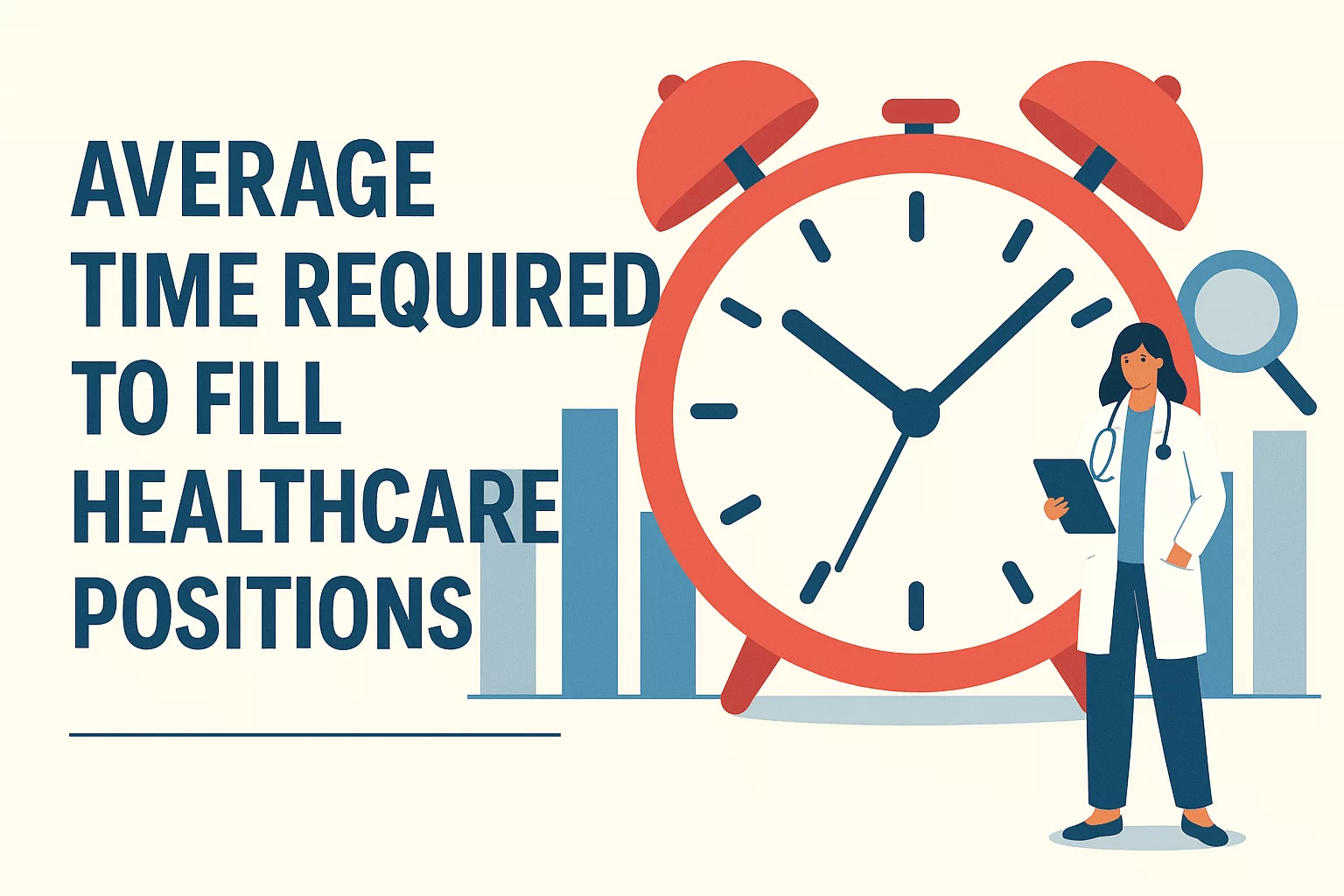
In the ever-evolving U.S. healthcare landscape, staffing has become both a critical function and a persistent challenge. As hospitals, clinics, and long-term care facilities strive to maintain high standards of care, understanding the average time-to-fill for medical positions is essential. This metric directly impacts patient care, staff satisfaction, and operational efficiency.
This blog post offers a complete guide for healthcare hiring professionals, covering national benchmarks, role-specific timelines, and proven strategies to reduce time-to-fill.
What Is Time-to-Fill in Healthcare Staffing?
Time-to-fill refers to the number of days between when a job requisition is opened and when a candidate accepts the job offer. In the healthcare sector, this metric is especially important due to the urgent nature of patient care and the scarcity of qualified professionals.
National Benchmarks for Healthcare Roles
According to multiple industry reports:
- The median time-to-fill across all industries is approximately 36 days.
- In the healthcare sector, this number rises to around 49 days, reflecting the added complexities of credentialing, background checks, and regulatory compliance.
However, the time-to-fill can vary significantly based on the role, geographic location, and organizational structure.
Time-to-Fill Benchmarks by Role
Clinical and Allied Health Staff
- Registered Nurses (RNs): 59 days
- Certified Nursing Assistants (CNAs): 30–45 days
- Allied Health Professionals (e.g., Lab Techs, Radiologists): 40–70 days
Physician Roles
Recruiting physicians is far more time-consuming due to high demand and a limited talent pool:
- Primary Care Physicians (PCPs): ~ 125 days
- Specialists: ~135–150 days
- Highly Specialized Roles (e.g., Urology, Neurosurgery): Up to 344 days or more
Some organizations report physician recruitment timelines extending up to 18 months depending on specialty and location.
Why Is the Time-to-Fill So Long?
Several factors contribute to the extended time-to-fill in healthcare:
- Credentialing Requirements: Background checks, license verifications, and compliance documentation prolong hiring.
- Limited Talent Pool: Especially for physicians and specialists, there simply aren’t enough qualified candidates.
- Geographic Challenges: Rural and underserved areas often struggle more with recruiting.
- Multi-stage Interviews: Panel interviews, site visits, and decision-making committees add time.
- Competition: Other healthcare systems or private clinics may lure candidates with better offers.
Impact of Long Time-to-Fill on Healthcare Organizations
- Extended time-to-fill periods carry significant consequences:
- Patient Care Delays: Staffing shortages can compromise quality of care.
- Increased Overtime Costs: Current staff take on extra shifts, leading to burnout.
- Revenue Loss: For every month a physician role goes unfilled, organizations can lose $150,000 to $250,000.
- Decreased Morale: Overworked staff and management stress can lead to higher turnover.
These challenges are part of a larger trend. As discussed in our previous post, the U.S. healthcare system is navigating a period of high attrition, evolving patient demands, and urgent labor shortages. The pressure to fill vacancies quickly while maintaining compliance and care standards is higher than ever.
How to Benchmark Your Time-to-Fill Metrics
To effectively benchmark your time-to-fill:
- Segment by Role: Separate data for physicians, nurses, and allied health staff.
- Compare to Industry Averages: Use the numbers above to assess where you stand.
- Track Over Time: Monitor trends monthly or quarterly to identify improvements or declines.
- Use Cost-Per-Vacancy Metrics: Combine time-to-fill with revenue loss for a complete picture.
Top 6 Strategies to Reduce Time-to-Fill in Healthcare
1. Leverage AI-Powered Recruiting Tools
Modern Applicant Tracking Systems (ATS) and AI-driven sourcing can reduce time-to-fill by 11+ days.
2. Streamline Credentialing
Automated verification tools and pre-credentialing pools of candidates can significantly cut delays.
3. Optimize Job Distribution
Post on niche healthcare job boards and use multi-channel outreach to reach more qualified candidates faster.
4. Improve Candidate Engagement
Text-based communications and mobile-friendly applications increase response rates and reduce drop-offs.
5. Build Internal Talent Pipelines
Partner with medical schools, residency programs, and offer referral bonuses to build a steady pipeline.
6. Consider MSP Staffing Models
Managed Service Provider (MSP) programs offer centralized, scalable solutions that reduce time-to-fill while improving quality.
Conclusion: Stay Competitive with Faster Time-to-Fill
Benchmarking your healthcare staffing performance against national and role-specific averages is critical. With typical time-to-fill averaging 49 days for health care roles and 125+ days for physicians, organizations must act strategically to remain competitive. The longer it takes to fill critical roles, the more patient care, staff well-being, and revenue are at risk.
By adopting modern tools, streamlining operations, and leveraging expert healthcare staffing partners, you can significantly reduce your time-to-fill and deliver better outcomes for patients and staff alike.
Need help optimizing your healthcare staffing process? VIVA USA Inc offers AI-powered sourcing, credentialed talent pools, and MSP staffing models that cut hiring timelines dramatically. Contact us today to get started.