Who’s Leaving Healthcare? A Look at Workforce Attrition Trends
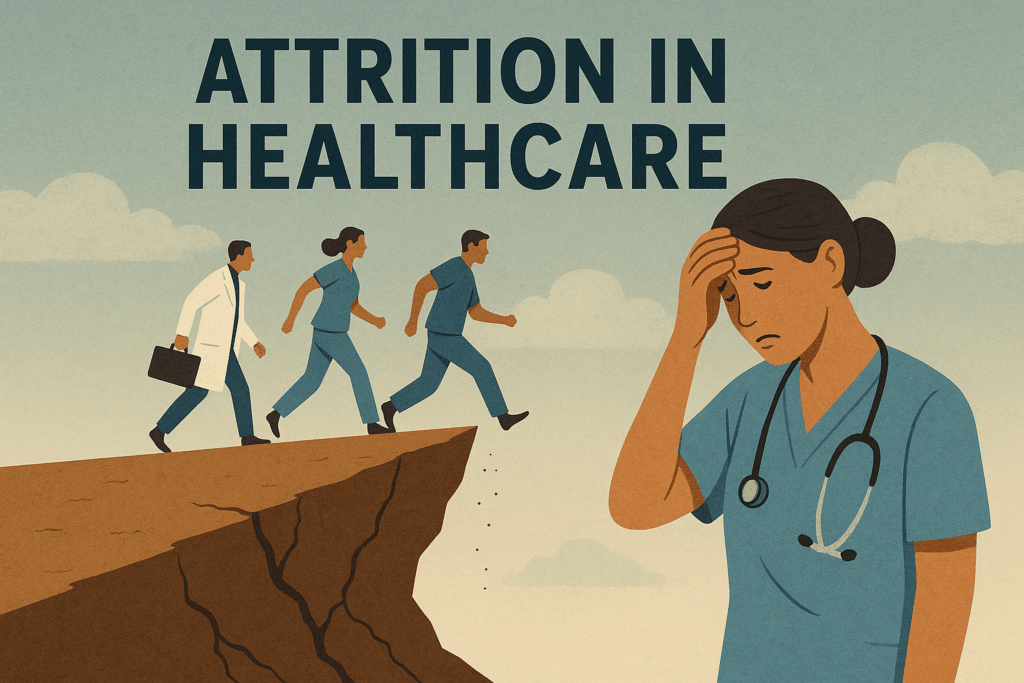
As the U.S. healthcare system continues to evolve post-pandemic, one issue remains at the forefront: workforce attrition. The “Great Resignation” hit healthcare harder than most industries, with high burnout rates, early retirements, and career shifts among healthcare professionals. In 2025, workforce attrition remains a defining challenge with serious implications for patient care, staffing strategies, and financial health.
This article explores who is leaving healthcare, why they’re leaving, and what healthcare systems can do to reverse the trend and fill critical staffing gaps.
The Scope of the Problem
According to a 2024 Statista survey, 20% of U.S. healthcare workers reported serious intentions to leave the profession within the next two years. Another KFF survey revealed that close to 30% of nurses are considering leaving the profession
The Bureau of Labor Statistics (BLS) projects that the U.S. will need to fill more than 1.9 million healthcare jobs annually through 2031, primarily due to retirements, role changes, and voluntary exits. Healthcare already comprises one of the largest employment sectors in the U.S., and the demand continues to grow.
Key groups leaving the workforce:
- Experienced nurses, especially RNs with 10+ years of experience, are retiring early or switching to non-clinical roles.
- Physicians over 55 are increasingly choosing early retirement due to stress, liability, and work-life imbalance.
- Younger professionals are pivoting to tech, insurance, or education sectors seeking better flexibility and compensation.
Top 4 Reasons for Attrition in the Healthcare Industry
1. Burnout
2. Inadequate Compensation
3. Safety Concerns
4. Administrative Burden
Demographic Breakdown
Understanding who is leaving healthcare helps target solutions more precisely.
- Age: Professionals over age 55 are retiring earlier than expected, creating sudden experience gaps.
- Gender: Women, who make up more than 75% of the healthcare workforce, are disproportionately affected due to caregiver responsibilities at home.
- Geography: Attrition is especially severe in rural and underserved areas where replacements are harder to find, and workloads are higher.
Impact on Healthcare Systems
The consequences of attrition are far-reaching, affecting the entire ecosystem:
- Increased labor costs: Hospitals must rely on travel nurses, temp workers, and overtime to fill gaps—at significant cost.
- Declining patient satisfaction: Understaffed facilities often lead to longer wait times, errors, and reduced patient communication.
- Reduced care continuity: Constant turnover disrupts team-based care models and hinders long-term patient-provider relationships.
- Higher recruitment and onboarding expenses: Replacing a healthcare worker can cost tens of thousands of dollars in sourcing, training, and administrative effort.
The attrition cycle also fuels burnout among remaining staff, creating a self-perpetuating staffing crisis.
Top 6 Strategies to Address Attrition in the Healthcare Industry
To slow or reverse attrition, healthcare systems need to tackle its root causes with targeted, sustainable interventions.
1. Workforce Wellness Initiatives
2. Compensation Adjustments
3. Reduce Administrative Burden
4. Career Development and Mentorship
5. Flexible Work Models
6. Strengthen Safety Protocols
Top 6 Ways to Fill the Existing Gaps in the Healthcare Industry
Even with retention efforts, large gaps remain. Here’s how to bridge them quickly and strategically:
1. Accelerate Pipeline Programs
Develop partnerships with nursing schools, allied health programs, and technical colleges. Offer tuition reimbursement and apprenticeships to draw in students early and secure future talent.
2. Use International Talent
Establish legal and credentialing frameworks to support foreign-trained nurses, physicians, and allied professionals. Expand visa programs and collaborate with international staffing agencies.
3. Expand Telehealth Staffing
Invest in virtual care platforms that allow providers to operate across state lines. Use telemedicine to reduce patient loads at physical sites and retain clinicians who prefer remote roles.
4. Tap Into Retired and Semi-Retired Professionals
Create flexible, part-time, or advisory roles for retired clinicians. Many are willing to return under less strenuous conditions, providing mentorship and stability.
5. Utilize Managed Service Providers (MSPs)
Engage with specialized healthcare staffing firms that offer rapid, vetted talent pools. MSPs reduce time-to-fill and offer flexibility during seasonal surges or crises.
6. Re-skill and Redeploy Internal Talent
Encourage administrative staff to retrain into clinical or tech support roles. Offer fast-track programs for medical assistants, coders, or health IT positions.
Conclusion: Building a Sustainable Workforce
Healthcare workforce attrition is not just a numbers issue—it’s a systemic challenge that touches recruitment, culture, care quality, and financial performance. In 2025, addressing it requires more than reactive hiring. Healthcare leaders must create sustainable, inclusive work environments that inspire long-term loyalty.
To move forward, healthcare organizations should:
- Invest in workforce well-being as a strategic priority, not just an HR function.
- Build educational and hiring partnerships to secure talent pipelines.
- Modernize staffing models using remote care, digital platforms, and AI tools.
- Engage employees with flexible options, meaningful growth, and transparent communication.
- By tackling attrition with both empathy and innovation, healthcare systems can retain top talent, improve patient outcomes, and future-proof their workforce.
Cut down hiring delays and simplify healthcare staffing with VIVA USA Inc. Our AI-powered tools, credentialed talent networks, and scalable MSP models are built to get you the right people fast. Contact us now to learn more.